Last updated October 15, 2026
How to Hire a ADU Contractor in Sacramento: A Step-by-Step Guide
Sacramento is in the middle of an ADU boom, and that’s drawn every kind of builder into the market – some excellent, some who’ll take your deposit and vanish. Hiring well isn’t about luck. It’s about running three verification steps that most homeowners skip, and those skipped steps are exactly where the bad outcomes happen. This guide walks you through each one, with the specific tools, questions, and red flags that matter in Sacramento right now, and you can find more guides & resources on our blog.
Quick Answer
To hire an ADU contractor in Sacramento, verify their license and bond status on the CSLB website in real time, demand a written scope document that makes every bid apples-to-apples, and confirm that the actual crew members coming to your property are background-checked and photo-verified. Do those three things before you sign anything, and you’ll eliminate most of the risk in the Sacramento ADU market. A written price lock – not an estimate with change-order language – should be in place before any work begins.
Table of Contents
- Step 1: Run a Real-Time License and Bond Check on the CSLB Website
- Step 2: Demand an Apples-to-Apples Scope Document Before Comparing Bids
- Step 3: Verify the Actual Workers Coming to Your Property
- What a Legitimate Written Price Lock Looks Like
- Red Flags Specific to Sacramento’s ADU Boom
- Permit Reality in Sacramento: What You Actually Need to Know
- Should You Consider a Prefab ADU in Sacramento?
- Common Mistakes to Avoid
- When to Call a Professional
- Frequently Asked Questions
- The Bottom Line
Step 1: Run a Real-Time License and Bond Check on the CSLB Website
Every legitimate contractor in California carries a license number issued by the Contractors State License Board. But here’s what most Sacramento homeowners don’t realize: a license number printed on a business card proves exactly nothing. The CSLB shows an average of 14,000 active disciplinary cases at any given time. Many of those contractors still have technically active licenses. They’re allowed to bid your job.
You need to check the license yourself, in real time, on the CSLB website. The process takes under three minutes, and it’s the single highest-value action you can take before signing anything.
- Go to the CSLB license lookup page. Search by license number, not business name. Business names change constantly in the ADU market. License numbers don’t.
- Confirm the license is classified correctly. An ADU build requires a General Building Contractor (Class B) license. Some contractors hold only a specialty classification (like Class C for concrete or framing) and still bid full ADU projects. That’s a red flag.
- Check the status field. “Active” is the baseline. But look for the bond history section. A contractor with a bond that’s been canceled, suspended, or paid out on a claim is signaling risk. The bond is your financial backstop if something goes wrong – it needs to be current and intact.
- Read the disclosure section. This is where disciplinary actions, citations, and arbitration awards live. A contractor with open complaints about abandoned projects or unlicensed subcontractors is someone you want to avoid, even if their license technically says “Active.”
- Verify the workers’ compensation insurance status. If the contractor has employees and doesn’t carry workers’ comp, you may be financially liable if a worker is injured on your Sacramento property. This isn’t a technicality. It’s your home equity at risk.
One more thing: “clear” status on the CSLB website means no disclosed issues. It does not mean the contractor has never had a complaint. Complaints under investigation may not appear publicly for months. This is why the license check is necessary but not sufficient. It’s your first filter, not your last.
Step 2: Demand an Apples-to-Apples Scope Document Before Comparing Bids
Here’s the trap most Sacramento homeowners fall into: they get three bids, line up the numbers, and pick the middle one. But if those three bids aren’t structured identically, you’re not comparing prices. You’re comparing ambiguities.
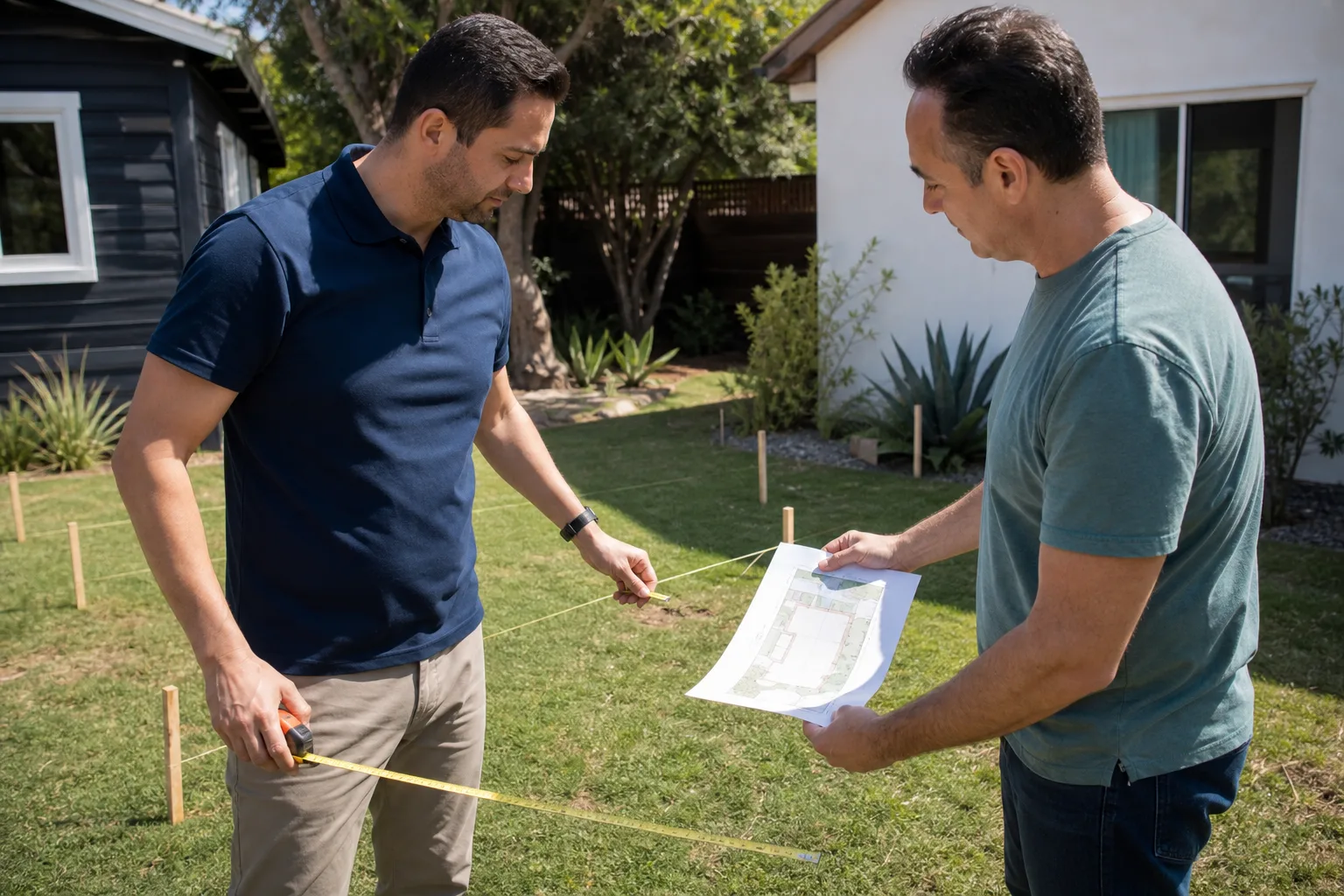
A legitimate scope document lists every deliverable in enough detail that a stranger could pick it up and know exactly what’s included. It answers questions like: What foundation type? What R-value insulation in which walls? What window brand and series? What flooring material and who supplies it? What’s the electrical panel capacity, and is a panel upgrade included or extra? What’s the permitting fee line item, and is it fixed or estimated?
In our experience walking Sacramento ADU projects, we’ve seen “estimates” that were a single page with a bottom-line number and a clause that read “subject to change based on existing conditions.” That’s not an estimate. That’s an invitation to a surprise invoice.
Here’s what to ask for when you’re comparing bids:
- A line-item breakdown, not a lump sum. If the contractor can’t itemize, they haven’t actually priced your project. They’ve guessed.
- Specific products, not generic descriptions. “Windows” is meaningless. “Milgard Trinsic series, dual-pane, low-E” is a real spec you can price-check. The same applies to insulation, roofing, siding, and fixtures.
- Explicit exclusions. What’s NOT included? Site clearing? Utility trenching? Landscaping repair? If it’s not excluded, it’s assumed included – and a good contractor will want that in writing as much as you do.
- A stated allowance for site conditions. Sacramento’s older neighborhoods – Land Park, East Sacramento, Curtis Park – often have hidden surprises under the soil: old footings, abandoned sewer lines, uncompacted fill. A scope document should state what happens if the crew hits something unexpected. That’s not an open-ended excuse for change orders. It’s a defined, pre-agreed rate for defined, pre-agreed work.
When all three bids use the same scope, you can actually compare numbers. When they don’t, you’re guessing. And guessing on a $200,000-plus build is how Sacramento homeowners end up 30% over budget.
Step 3: Verify the Actual Workers Coming to Your Property
A license check tells you about the company on paper. A scope document tells you what you’re buying. But neither tells you anything about the human beings who’ll be at your house for four to eight months. That’s the gap most hiring guides skip, and it’s the one that matters most to the homeowner who’s often home alone, or who has young kids, or who simply doesn’t want strangers with unfettered access to their property.
Here’s the uncomfortable truth: most Sacramento ADU contractors run a licensed, bonded front office and then staff their jobs with day laborers or unvetted subs. The contractor you interviewed is not the person who’ll be standing in your kitchen asking to use the bathroom. You have a right to know who that person is.
The questions to ask, in order:
- “Are your field personnel background-checked?” Ask for the policy in writing. “We hire good people” is not a policy. A real answer names the screening company, the check types, and how often they’re re-run.
- “Will you send me the name and photo of every worker before they arrive?” This is the practical application of a background-check policy. If a contractor balks at this, ask yourself why. Photo badging is standard practice in every other industry where strangers enter private homes – pest control, HVAC, plumbing. Why would a construction crew be different?
- “Do your workers show ID at the door, every time?” The answer should be an unqualified yes. Not “if asked.” Not “the lead guy does.” Every person, every visit.
- “Who are your subcontractors, and are they held to the same standard?” If the contractor uses subs for electrical, plumbing, or framing, those subs need the same vetting. If the contractor can’t name their subs, that’s a red flag specific to the current Sacramento market – and we’ll get to that in a moment.
This is what the ADU Builders in Sacramento market gets wrong most often. Companies credential the brand. They forget that the brand never shows up at the door. A person shows up. And you should know who that person is before you open it.
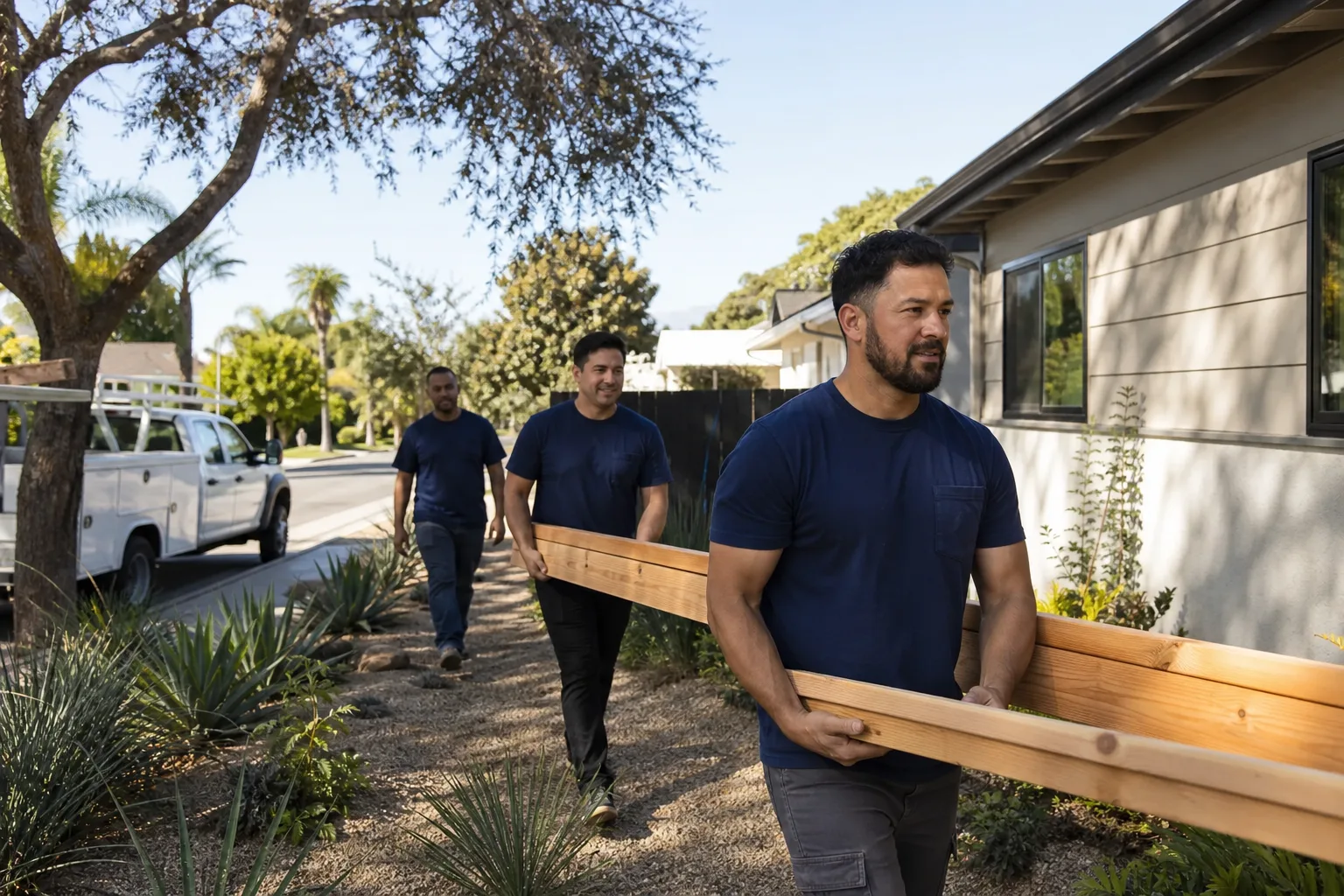
At Sutton ADU Builders, every field technician operates under the Threshold Standard: background-checked, identity-verified, uniformed, and photo-badged, with their name and photo sent to you before the visit. The crew member who arrives is the same person you approved in advance. That’s the way it should work everywhere. It just doesn’t.
What a Legitimate Written Price Lock Looks Like
There’s a difference between an estimate and a written price. An estimate says, “We think it’ll cost around this.” A written price says, “This is what it costs. Period.” The difference isn’t semantic. It’s contractual. And it’s the single most common place Sacramento homeowners get burned.
Here’s how the burn works. The contractor gives you a number – say, $240,000 for a detached two-bedroom ADU. The number looks good. The contract says “estimate” at the top. Buried in the terms is language about “unforeseen conditions,” “material price fluctuations,” or “change orders as required.” Three months into the build, the change orders start. The $240,000 ADU becomes a $310,000 ADU. And you approved it, because you signed a contract that allowed it.
A legitimate written price lock has these characteristics:
- It’s called a fixed price or a guaranteed price, not an estimate. The word matters. If the contract says “estimate,” it’s not a lock.
- It includes a defined scope with no open-ended provisions. “Existing conditions” can be a real issue, but a legitimate contract handles it with specific allowances, not unlimited authority to escalate.
- It specifies what happens if something goes wrong. Not in vague language. In specific language: who pays, how much, and how the decision gets made.
- It’s backed by a written workmanship guarantee. Not a handshake. Not a “we’ll take care of you.” A named, written promise with a defined term. The 365-Day Done Right Promise at Sutton ADU Builders covers defects in workmanship for one full calendar year from project completion – if the work isn’t right, we make it right, in writing, with a free second visit if any element fails. That’s not a verbal assurance. It’s a contract term.
The most expensive sentence in Sacramento ADU contracting is: “We’ll work something out.” If it’s not in writing, it doesn’t exist.
Red Flags Specific to Sacramento’s ADU Boom
Every market has its own failure patterns. Sacramento’s ADU boom – driven by relaxed state law, nearly $100 million in regional grant funding, and a genuine housing shortage – has produced a few that are especially common here. Here’s what to watch for:
“You don’t need a permit for this.”
Every ADU in Sacramento requires a building permit-every single one-and understanding ADU Permits, Codes & Inspections in CA: What You Need to Know is essential before you start. There are no permit exemptions for detached ADUs, garage conversions, or room additions in the city of Sacramento or unincorporated Sacramento County. There are relaxed fees for ADUs under 750 square feet in some jurisdictions, but the permit itself is not optional. A contractor who says otherwise is either lying or dangerously misinformed. Unpermitted work can halt your project at inspection, complicate your homeowners insurance, and destroy your resale value. Walk away.
“We need 50% upfront to order materials.”
California law caps the down payment for home improvement contracts at 10% of the total project cost or $1,000, whichever is less. That’s not a best practice. That’s Business and Professions Code Section 7159. A contractor asking for more than 10% upfront is violating state law, full stop. The payment schedule should be tied to milestones – foundation poured, framing complete, rough-in done – not to a vague “materials order” that happens before work begins.
“My subs will handle that.”
Asked a direct question about who’s doing the electrical, plumbing, or foundation work, and the contractor can’t name names. That’s a problem. Every sub on a Sacramento ADU project should be known in advance, licensed where required, and held to the same vetting standards as the primary contractor. If the GC can’t tell you who’s doing the work, they haven’t actually planned the job – or they’re planning to figure it out after you’ve signed.
“I can start next week.”
Good Sacramento ADU contractors are booked. The market is saturated with demand, and the reputable firms have pipelines measured in months, not days. A contractor who can start immediately is available because no one else will hire them. That’s not always true – cancellations happen – but it’s true often enough that you should treat instant availability as a warning sign, not a convenience.
Permit Reality in Sacramento: What You Actually Need to Know
Sacramento’s ADU permitting landscape is relatively friendly compared to other California cities, but it’s not simple. The city of Sacramento operates under its own ADU ordinance, which generally follows state law with some local wrinkles. Sacramento County has separate rules for unincorporated areas like Arden-Arcade, Carmichael, and Fair Oaks. What works in Curtis Park may not apply in Citrus Heights.
Here’s the practical picture:
- Plan review timelines vary. The city of Sacramento has made real strides on ADU review times, but projects still commonly take four to eight months from submittal to issued permit, depending on complexity and whether the project triggers any overlay requirements.
- Setbacks apply. A setback is the required gap between your new structure and the property line. State law sets a default of four feet for side and rear setbacks on ADUs, but Sacramento neighborhoods with specific zoning overlays may have different requirements. Your contractor should know the exact setback for your parcel before you’ve paid a dime.
- School fees and impact fees apply to attached units over 500 square feet. Detached ADUs under 750 square feet are typically exempt from impact fees. This is where square footage decisions get financially consequential.
- Sacramento’s climate matters for construction choices. The Sacramento Valley sees summer highs above 100 degrees and winter lows near freezing. A properly insulated, properly sealed ADU in Sacramento is not a luxury – it’s the difference between a unit that’s comfortable year-round and one that costs a fortune to heat and cool. Your scope document should specify insulation values, window performance, and HVAC sizing. Guesswork here shows up on your utility bill for decades.
A good Sacramento ADU contractor handles all of this without you needing to become a code expert. But you should know enough to recognize when someone’s hand-waving. If a contractor can’t explain the setback requirement for your parcel, or doesn’t know whether your project triggers school fees, they haven’t done the work yet. And you’re the one who’ll pay for their learning curve.
Should You Consider a Prefab ADU in Sacramento?
One decision that’s increasingly relevant for Sacramento homeowners is whether to go with a site-built ADU or a prefab or modular unit. Both have a place. The right answer depends on your lot, your budget, and your timeline.
Prefab ADUs – from companies like Abodu, Cover, and others in the factory-built space – can compress the construction timeline significantly because the structure is built in a controlled environment while site work happens in parallel. For a flat Sacramento lot with clear crane access and minimal soil complications, a prefab unit can be an excellent choice. We’ve worked with prefab product lines including Abodu, Cover, Dvele, Mighty Buildings, Boxabl, and Plant Prefab, and the quality varies by manufacturer and model – so does the price.
Site-built ADUs offer more customization and are often the better option for Sacramento neighborhoods with narrow lots, overhead power lines that complicate crane access, or historic district restrictions. East Sacramento and Land Park, for example, have pockets where a prefab delivery simply won’t work. A competent contractor should be able to explain which approach fits your specific lot, not push whichever one they happen to offer.
The same applies to materials and systems. James Hardie exterior cladding, for instance, performs well in Sacramento’s hot, dry summers and wet winters – better than wood siding, which the valley’s temperature swings are hard on. A Home Addition Contractor in Sacramento who knows the local climate will make recommendations like this without you having to ask. The ones who don’t mention climate at all are applying a generic playbook.
Common Mistakes to Avoid
- Checking the license but not the bond. An active license with a canceled bond is like a driver’s license with no insurance. The license lets them bid; the bond is what protects you when something goes wrong. Check both, every time.
- Comparing bids without a scope document. Three different contractors, three different scopes, three different definitions of “included.” You haven’t comparison shopped anything. You’ve collected three guesses.
- Signing a contract with change-order language you haven’t read. Most Sacramento homeowners never read the contract. The ones who do often don’t understand what “unforeseen conditions” authorizes. Read it. Ask. Get specific answers in writing.
- Hiring the company but not vetting the crew. The contractor who sells you the project is not the person who’ll build it. If you don’t know who’s coming to your property, you’ve outsourced your family’s safety to a stranger.
- Paying more than 10% upfront. It’s not a preference. It’s California law. Anyone asking for more is either ignorant of the law or openly violating it. Neither is someone you want managing a construction project.
- Treating the permit as a formality. Unpermitted ADU work in Sacramento is discovered more often than people expect – through refinance appraisals, buyer inspections, or neighbor complaints. The cost to legalize unpermitted work after the fact is routinely higher than the cost of permitting it correctly in the first place.
- Choosing the lowest price because all the bids “look about the same.” They’re not the same. The scope document is where you’ll find the difference – the missing insulation, the unlisted permit fees, the allowance for site conditions that should have been included. The low bid is often the incompletely scoped bid.
When to Call a Professional
Some decisions you can research on your own. Figuring out whether a Sacramento ADU pencils out for your lot, what the permit path looks like, and which scope details matter for the valley’s climate – those are things a professional conversation clarifies quickly. But certain situations genuinely require a contractor with specific experience: sloping lots in the foothills, parcels with access challenges, any design that involves a second story over an existing structure, and any project where unpermitted existing work needs to be unwound before new work can begin. If your project touches any of those, don’t start with a generalist. Start with someone who’s done it before. Sutton ADU Sacramento offers free estimates in Sacramento – call (279) 300-1690 to schedule yours.
Frequently Asked Questions
Most detached ADUs in Sacramento run $180,000 to $320,000 before site work, depending on size, finishes, and site conditions. Attached conversions and garage conversions typically land between $120,000 and $220,000. Prefab units have a wide range, with entry-level units starting around $120,000 and premium models exceeding $350,000 before site preparation. The biggest variables are foundation type, utility trenching distance, and finish level. Call (279) 300-1690 for an exact quote – estimates are free.
A typical detached ADU in Sacramento takes six to ten months from design to final inspection, with permitting accounting for two to four of those months, so planning for Seasonal ADU Care for Sacramento: Year-Round Homeowner’s Guide starts before you even break ground. Prefab builds can compress the on-site construction phase to eight to twelve weeks, though the full timeline including permits and site prep still runs five to seven months. Your contractor should give you a written schedule with milestones, not just a finish date.
Yes. Every ADU in Sacramento, whether attached or detached, requires a building permit. There are fee reductions and some exemptions from impact fees for smaller units, but the permit itself is mandatory in every jurisdiction in the Sacramento area. A contractor who says otherwise is giving you bad advice.
Run their license number on the Contractors State License Board website (cslb.ca.gov), check that the classification is General Building Contractor (Class B), confirm the bond is active and unclaimed, and read the disclosure section for any disciplinary history. The whole process takes under three minutes and it’s the most important check you’ll do.
The legal maximum down payment in California is 10% of the total project cost or $1,000, whichever is less. Any contractor asking for more upfront is violating state law. The rest of the payment should follow a milestone schedule tied to completed work – foundation, framing, rough-in, finish.
No, and you shouldn’t accept it. The crew that shows up should be the crew you approved in advance. Ask for the name and photo of every worker before they arrive, and require that they show photo ID at the door every time. If a contractor can’t or won’t do that, find one who will. The standard exists in the Sacramento market. It’s called the Threshold Standard, and it’s how Sutton ADU Builders has operated since 2006.
The Bottom Line
Hiring an ADU contractor in Sacramento fails at the vetting stage. The fixes are simple and they’re all within your control: run the CSLB check on the license number, not the business name. Demand a scope document that makes every bid structurally identical before you compare a single dollar figure. And verify the actual people coming to your property with the same rigor you’d apply to anyone else you let into your home. Do those three things and the worst outcomes in the Sacramento ADU market stop being something that happens to you. The Sutton ADU Sacramento home page has more detail on how we apply these standards to every project – and a Room Addition Contractor in Sacramento can answer questions about projects that aren’t full ADU builds but still need the same vetting discipline.
Written by Miles Hartwell, Owner at Sutton ADU Sacramento, serving Sacramento since 2006.