James Hardie Home Addition Contractor in Sacramento: What to Know First
We’re an independent James Hardie home addition contractor serving Sacramento homeowners who need new square footage tied into existing fiber cement siding, trim, and exterior systems. Most room additions and second-story projects run 10 to 16 weeks from first stake to final inspection, depending on scope and the city’s plan-check queue. We give you a written price before any work starts, so you’ll know exactly what the addition costs before a single tool touches your property.
This page is for homeowners who already have James Hardie siding on their house or plan to use it on an addition. If you’re adding a bedroom, a bump-out, a sunroom, or going up a story, matching your existing Hardie lines matters more than most people realize. Call (279) 300-1690 and we’ll walk the property with you.
How James Hardie Products Fail – and How We Fix Them
- HardiePlank lap siding butt joints opening up. In Sacramento’s dry summers, HardiePlank absorbs and releases moisture on a cycle that eventually pulls the caulked butt joints apart. When we tie an addition into existing siding, we inspect every joint within three feet of the new roofline. Half-open joints behind the addition’s ledger board are what cause rot nobody sees for years. We cut out the failed joint, back-rod it, and reseal with a paintable elastomeric that moves with the plank.
- HardieTrim board wicking at grade. HardieTrim is durable, but it’s not meant to sit within two inches of soil or slab edges. Older Sacramento homes often have trim that was installed touching the finish grade, and that’s where it wicks moisture and swells. When we frame an addition, we pull any HardieTrim within the splash zone and re-set it with the proper clearance gap. If it’s too far gone, we cut a matching replacement piece and prime every cut edge, which is factory-spec and keeps the warranty intact.
- HardieSoffit cracking at fastener lines on older installs. We see this on 2000s-era Sacramento homes. The original installer over-drove nails, and over the years the soffit panels split along the fastener line. It’s common enough that we automatically check soffit panels on the existing structure before we tie in new framing. Cracked panels get replaced and new soffit is installed with a nail gun set to the correct depth, not snugged down by hand.
- ColorPlus finish fading unevenly on sun-facing elevations. The ColorPlus factory finish holds up well, but Sacramento’s south- and west-facing walls take a beating. When you add a room, the new Hardie panels will not match the sun-faded originals. We’ll tell you that up front and give you two honest options: field-paint the addition to visually blend, or re-coat the entire affected elevation so everything reads the same. We don’t let homeowners discover the shade difference after the scaffolding comes down.
- Flashing failures where Hardie meets the roof line on second-story additions. This is the one that costs people the most. If the original siding wasn’t flashed correctly at roof-to-wall transitions, water gets in behind the Hardie and sits against the sheathing. By the time it shows inside, the repair is structural. When we add a second story, we strip the existing siding at every roof-to-wall intersection and install proper stepped flashing before the new Hardie goes on. It adds a day to the job and prevents a $15,000 rot repair later.
Our James Hardie Home Addition Contractor Process
- 1
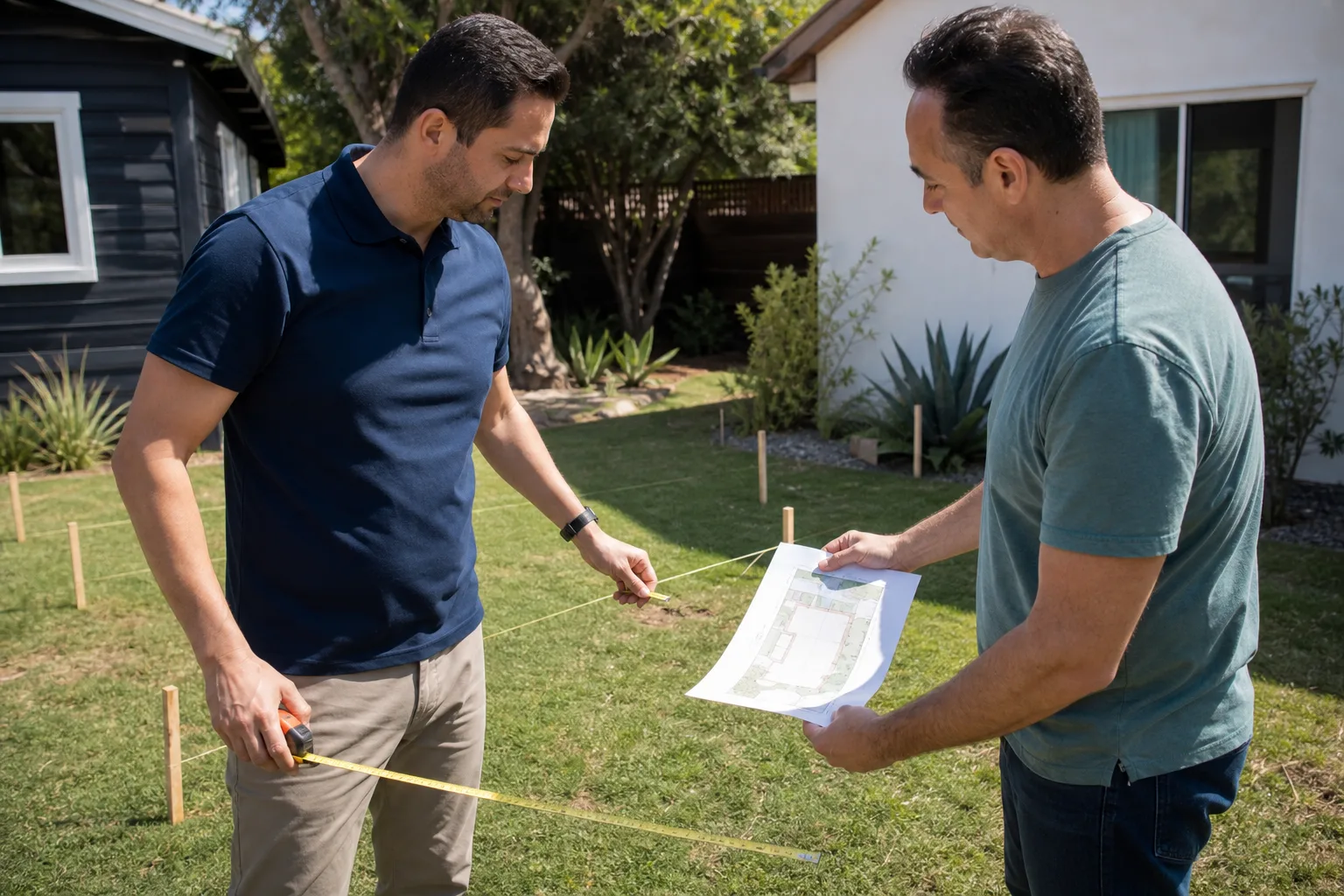
Walk-through and match call. We identify your existing Hardie line, texture, and color. HardiePlank lap? HardiePanel vertical? ColorPlus or primed? We measure exposure and note which elevations need the most matching work.
- 2
Written scope and price. You get a line-item price covering framing, siding, trim, flashing, and paint-matching. No allowances that quietly grow. No “we’ll see what we find.”
- 3
Permits and plan check. We pull permits through Sacramento’s building department. If it’s an ADU, we handle the separate ADU review path. You’ll know the timeline before we file.
- 4
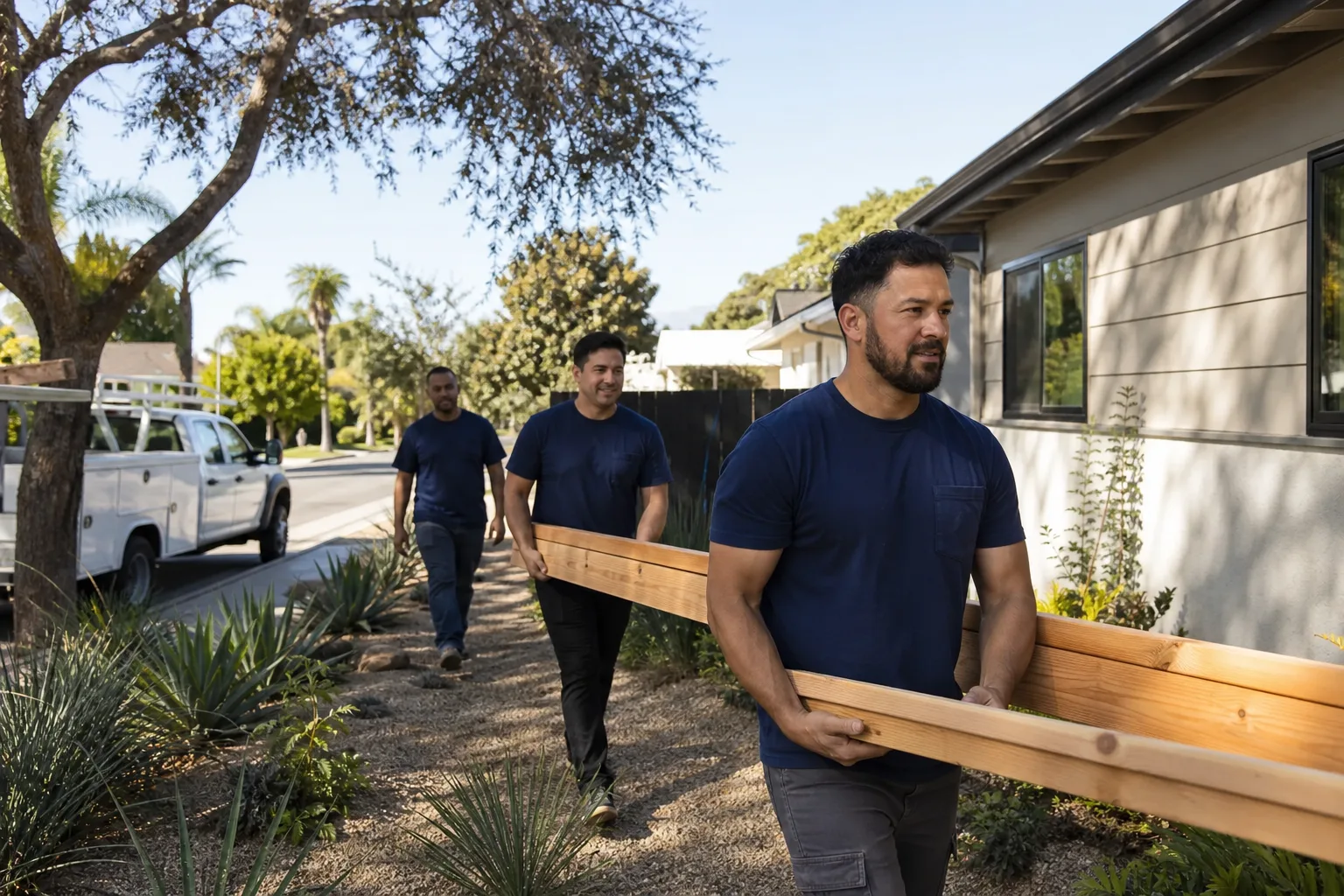
Framing and weather barrier. Addition framed, sheathed, and wrapped. Existing Hardie carefully cut back at tie-in points. Flashing and water management go in at every transition.
- 5
Hardie install and trim. New Hardie panels or planks installed to manufacturer spec, including proper fastener depth, joint treatment, and clearance at grade and roof lines. Touch-up painting where existing finishes meet new.
- 6
Final walk-through and the 365-Day Done Right Promise. We walk the addition with you, point out every tie-in, and explain what was installed. The written guarantee covers defects in workmanship for one full calendar year from completion.
What James Hardie Home Addition Contractor Costs in Sacramento
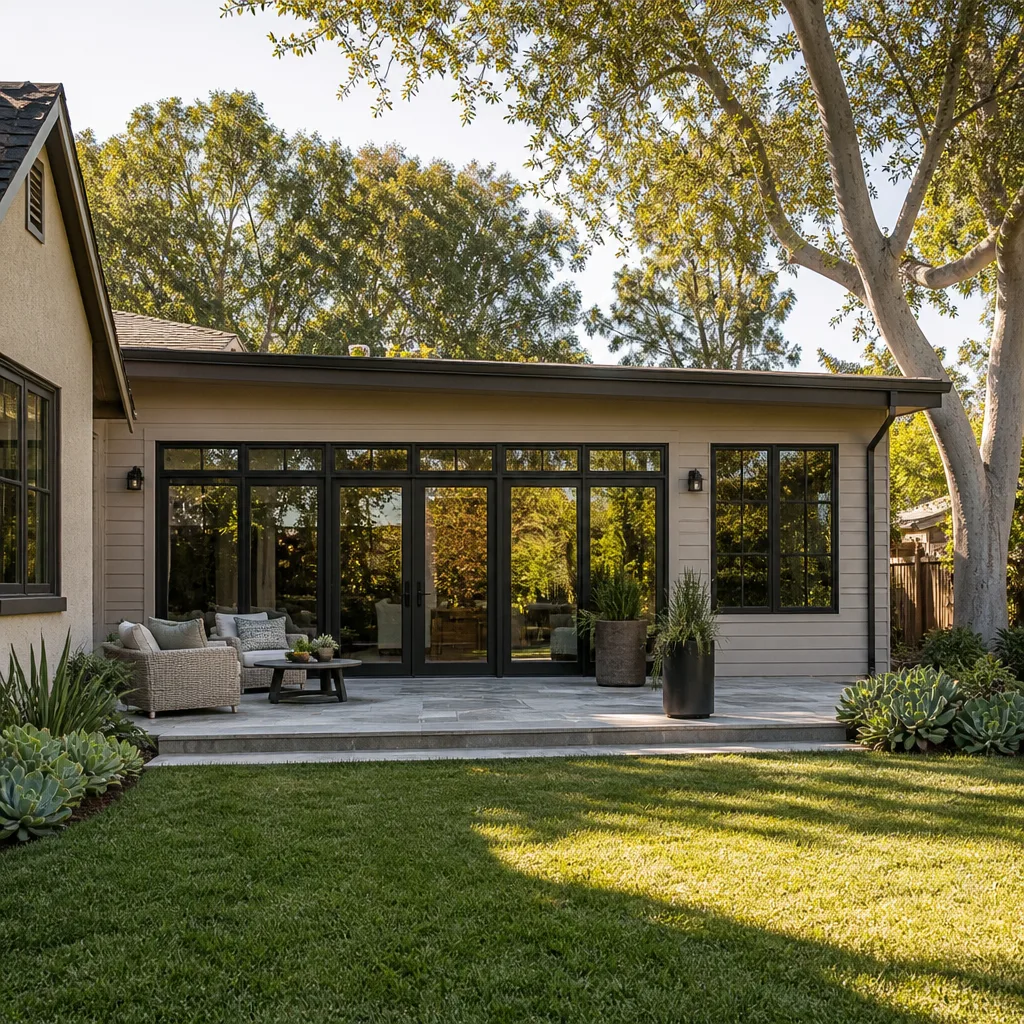
Here’s what Sacramento homeowners should expect to pay for common addition scenarios that involve tying into existing James Hardie siding:
- Bump-out addition (80 – 120 square feet): $55,000 – $95,000 depending on foundation work and finish level. Siding and trim typically add $4,000 – $7,000 of that.
- Single room addition (150 – 250 square feet): $90,000 – $160,000. The Hardie-match work, including any repairs to existing siding at the tie-in, usually accounts for $6,000 – $12,000.
- Second-story addition (500 – 800 square feet): $180,000 – $320,000. Re-siding and flashing the existing roof-to-wall intersections adds real scope, typically $12,000 – $20,000 depending on how much old siding we strip back.
- Detached ADU with Hardie exterior (400 – 600 square feet): $180,000 – $320,000 before site work. Hardie is a smart exterior choice here because it matches the main house and holds up in Sacramento’s climate, but it’s not the cheapest cladding option.
What moves the price: condition of the existing siding at the tie-in, second-story work versus single-story, whether your Hardie is ColorPlus (harder to touch up) or primed (field-painted, easier to blend), and what Sacramento’s plan-check queue looks like that quarter. Call (279) 300-1690 and we’ll give you a written price, not a ballpark.
Why Sacramento Homeowners Call Sutton ADU Sacramento for James Hardie Work
Most addition contractors treat the siding as an afterthought. We don’t, because a mismatched or poorly flashed Hardie tie-in is the first thing you’ll see every time you pull into the driveway, and the first thing that fails if it was done cheap. Every Sutton project runs under the Threshold Standard: a written price before work begins, a 365-Day Done Right Promise covering workmanship, and a free second visit if any element fails within the year.
You’ll also know exactly who’s coming to your property. Every technician is background-checked, identity-verified, uniformed, and photo-badged. Their name and photo are sent to you before arrival. If you’re home alone, or your kids are home during the build, that matters. We also work with prefab ADU brands like Abodu, Cover, and Dvele, so if a panelized addition ends up being the better fit for your lot, we’ll tell you that instead of pushing stick-built because it’s what we bid.
FAQs
Yes, with an important caveat. If your existing Hardie is ColorPlus, the factory finish on new panels will be close but not identical to years-old painted siding that has been through Sacramento sun. We’ll show you the difference on a test piece before we commit. For a true match on older homes, we typically field-paint the new panels and blend the surrounding area. If you have primed Hardie that was painted on site, matching is much easier because we can use the original paint if you saved the record.
Adding onto your home does not void the product warranty on the original Hardie siding, as long as the modification at the tie-in is done without damaging the intact product beyond the necessary cut line. We cut clean, we flash properly, and we never make unnecessary penetrations into existing Hardie. As an independent James Hardie service provider, we’re not affiliated with or authorized by James Hardie, but we install to the published installation specs because that’s what protects your warranty position.
Most single-story room additions in Sacramento run 10 to 14 weeks, and second-story additions run 12 to 16 weeks. The two factors that most affect the timeline are the city’s plan-check queue and any repair work on the existing Hardie at the tie-in. We’ll give you a written schedule before you sign, and if the plan-check queue moves, we’ll tell you the same day we find out.
Before, in most cases. If there are failing butt joints, cracked soffit panels, or trim touching grade near where the addition ties in, it’s far easier and cheaper to address those before framing goes up and scaffolding blocks access. We identify that during the walk-through and include any needed repairs in the written price, so you’re not hit with a surprise change order later. Call (279) 300-1690 and we’ll tell you what your siding needs before the addition starts.
We do. Sutton ADU Sacramento has experience with Abodu, Cover, and Dvele prefab ADU systems, along with Tuff Shed conversions. If you’re deciding between a stick-built addition with Hardie siding and a prefab ADU, we’ll give you honest numbers on both. A prefab unit with a Hardie exterior might come in faster, and in some Sacramento neighborhoods, the speed matters more than the flexibility.
Written by Miles Hartwell, Owner, Sutton ADU Sacramento at Sutton ADU Sacramento, serving Sacramento and nearby areas.