Abodu Site Prep & Utilities: The Sacramento Owner’s Guide
If your Abodu unit is set to arrive and your site isn’t ready, or the utility trenching has stalled, we stock and install the full range of Abodu-compatible site prep materials and utility hookups in Sacramento. Most Sacramento homeowners pay $18,000 – $48,000 for complete site prep plus utility trenching, depending on lot conditions, soil type, and how far the unit sits from the existing main panel, sewer line, and water meter. You’ll know something’s off when the delivery date gets pushed because the pad isn’t poured, PG&E hasn’t approved the panel placement, or the city inspector flags the trench depth – all problems you can see coming and fix early with the right eyes on the job.
Which Abodu Models This Applies To
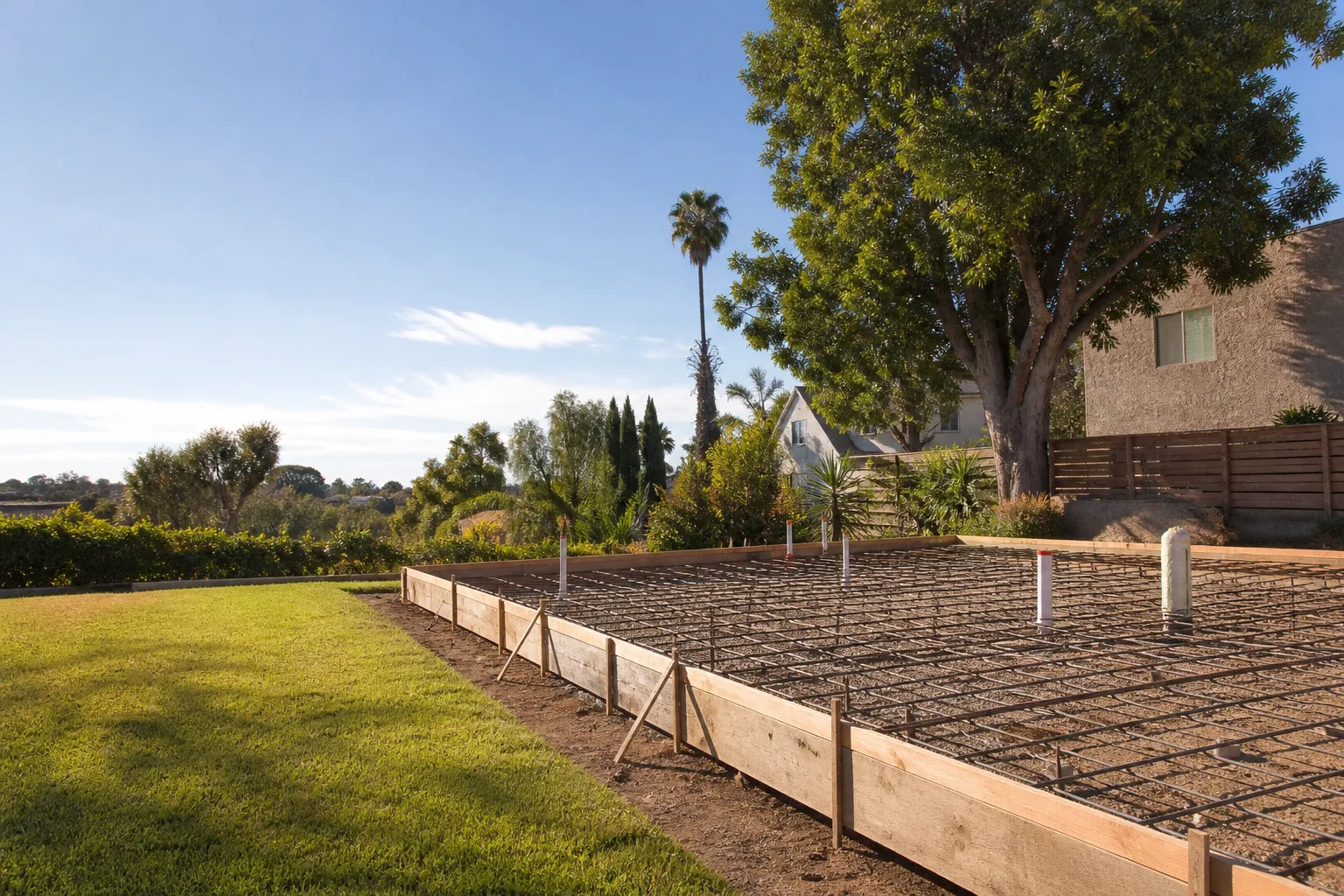
Abodu’s product line has shifted over the years, and site prep requirements differ more than most owners expect. The earliest Studio 240 and Studio 320 units (400 sq ft footprint range, circa 2018 – 2021) sit on shallow perimeter footings with tie-down anchors, while the current One and Two series run 500 – 1,000 sq ft and demand a full reinforced slab with thickened edges. Abodu engineering documents call for a minimum 4-inch slab with #4 rebar at 18 inches on center for most Sacramento lots, but clay-heavy soils in neighborhoods like Tahoe Park and Colonial Heights often require 6 inches plus a compacted gravel base to pass inspection. Verify what you have by checking the delivery binder that came with your unit: the site plan sheet lists footing specs and utility stub-out locations. If that binder’s gone, we can pull the model number off the framing label inside the unit and match it to the original engineering packet. OEM site-prep kits from Abodu exist for pier-and-beam legacy models, but for slab work the concrete, rebar, and vapor barrier are genuinely identical whether you buy through a reseller or through your local material yard – what matters is the spec sheet, not the logo on the bag. One honest note: Sutton ADU Sacramento is an independent service provider and not affiliated with Abodu, which means we can’t process Abodu warranty claims, but we do know which prep failures trigger them and which don’t.
Signs Your Abodu Site Prep & Utilities Are Failing
- Sewer line won’t hold water during a test. Sacramento inspectors require a hydrostatic or air test on new sewer laterals before they’ll sign off. Failures usually trace back to improper bedding material – sand instead of compacted crush – or a joint that separated when the trench settled.
- Electrical trench keeps getting rejected by the city. The California Electrical Code requires 18 inches of cover for PVC conduit under a residential yard in Sacramento, but 24 inches if the path crosses a driveway. Most rejections happen when the trench was dug to 18 inches everywhere and nobody checked the driveway crossing.
- Pad is cracking within the first season. Hairline cracks in the first 30 days are often just curing shrinkage. Cracks wider than a quarter-inch, or cracks that appear after the first Sacramento winter, point to poor subgrade compaction or missing rebar at slab edges.
- Water pressure inside the unit is weak. Abodu units tee off the main supply line, and if the trench is too shallow for the pipe run, Sacramento’s freeze-thaw cycle – mild as it is – still moves the ground enough to kink PEX over time. Proper depth is 12 inches minimum under landscape areas.
- Tie-down anchors are pulling loose. On legacy pier-and-beam Abodu models, anchors in sandy South Sacramento soil can walk out of the ground within two years if they weren’t set in concrete footings. The unit will still stand, but it shifts enough to bind doors and crack interior drywall joints.
Replacement Cost & What’s Included
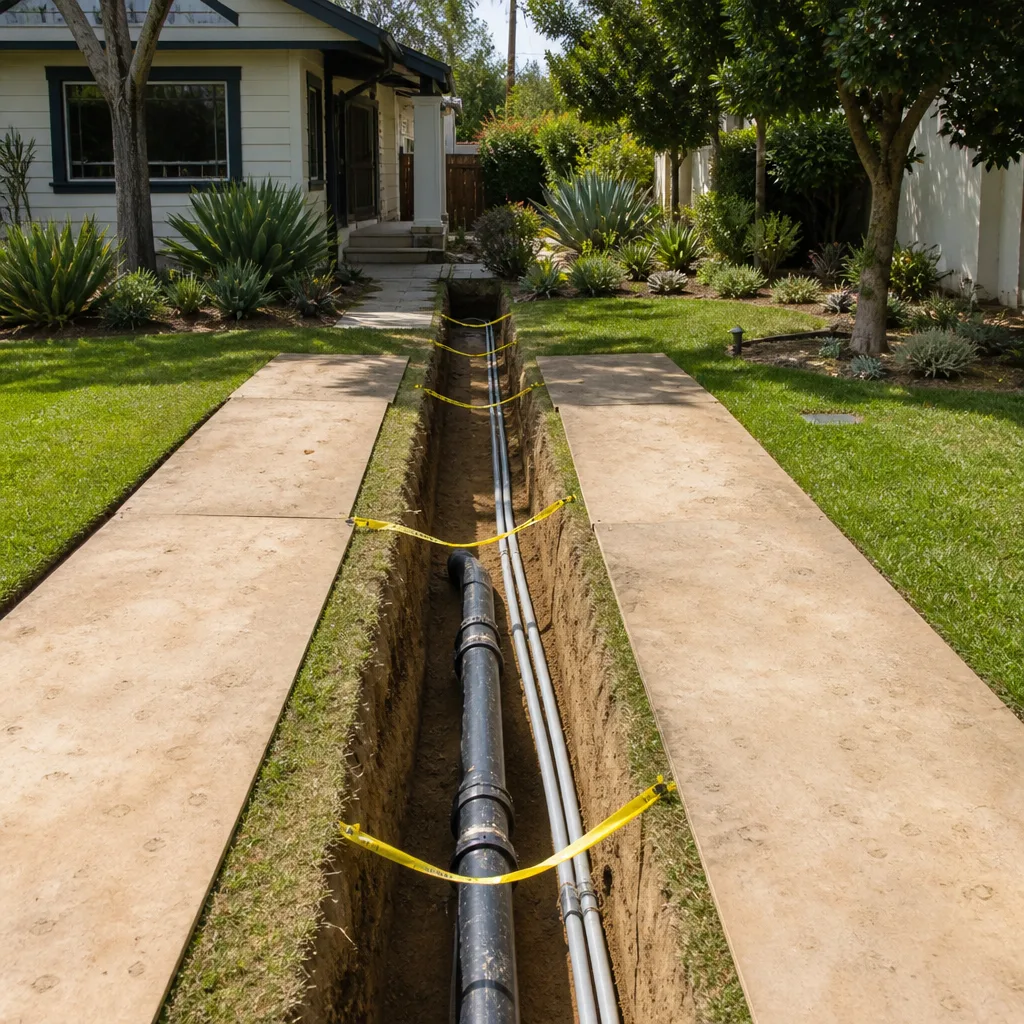
Clear numbers, because you deserve them before you write a check. Here’s what we’re seeing across Sacramento right now:
- Trenching for electrical and water (typical 40 – 80 ft run): $3,500 – $8,500
- Sewer lateral tie-in (dig, connect, backfill, test): $4,200 – $9,800
- Slab pour for a 500 – 750 sq ft ADU, including rebar and vapor barrier: $9,500 – $18,000
- Subgrade compaction and gravel base (when existing soil fails a compaction test): $2,800 – $6,500
- Panel upgrade plus trench inspection coordination: $2,500 – $7,000
What pushes a Sacramento job toward the top of those ranges: caliche layers that need rock-breaking, long utility runs from an alley-fed main, tree-root remediation along the trench path, or lots where the existing panel is maxed out and SMUD requires a service upgrade. Every price we give is written and locked before dirt moves. The work is covered by our 365-Day Done Right Promise, which means if the compaction fails or the trench settles and your inspector flags it within a year, we come back and fix it on our dime.
DIY or Call Us?
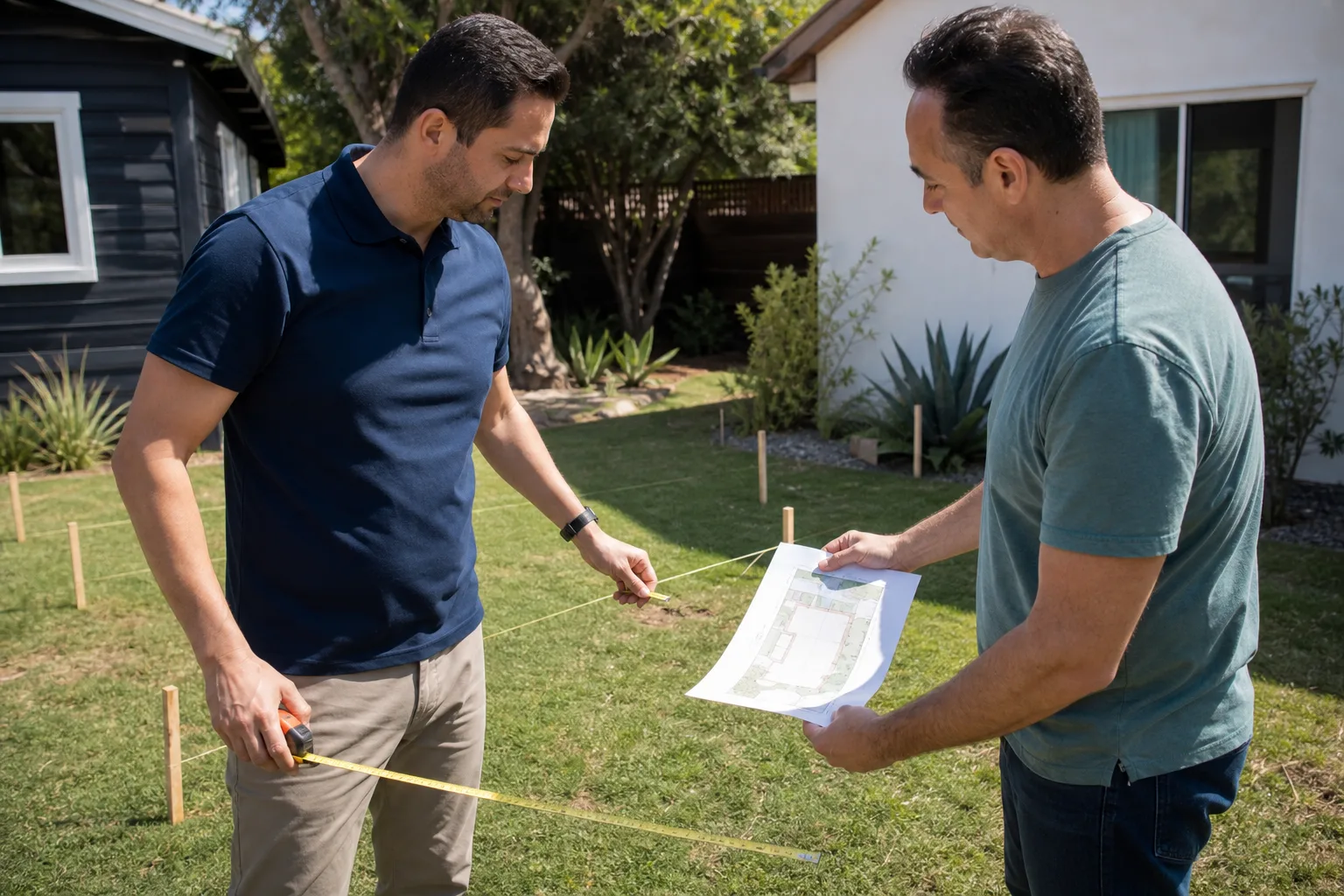
There are two safe things an owner can do on this front. First, pull your Abodu packing list and site plan and confirm the unit’s utility stub-out location matches what your contractor has marked on the ground – mismatched stubs are the most common reason a delivery gets rejected on arrival day. Second, call 811 and have utilities located before anyone digs, then photograph the marks. That’s free and protects you if a line gets hit. What you should not do yourself is dig a trench across a gas line path, pour a structural slab without compaction testing, or wire a subpanel without pulling the proper Sacramento permit. A wrong-depth sewer trench fails inspection and you’ll pay for the re-dig. If the pad cracks because the subgrade wasn’t compacted, you’re pulling permits all over again. That’s where a call to (279) 300-1690 saves you real money – we’ll look at the lot, tell you honestly what’s needed, and give you a written number before you commit to anything.
FAQs
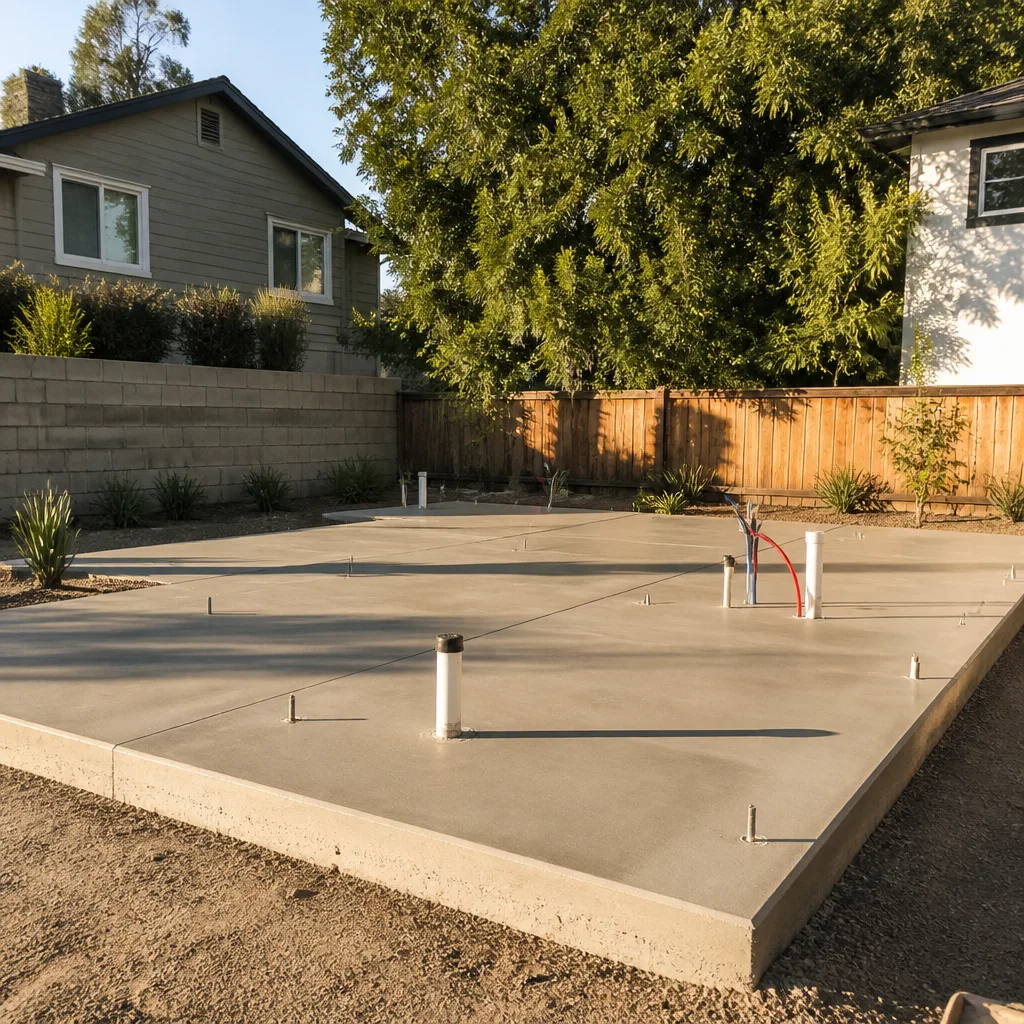
A properly compacted slab and correctly bedded utility trenches should outlast the structure sitting on them – 50+ years for the concrete and 40 – 60 years for properly installed PEX water lines and Schedule 40 PVC conduit in Sacramento soil conditions. The weak points are anchor systems on older pier-and-beam units, which can need re-setting within 15 – 20 years. Call (279) 300-1690 and we’ll walk your lot with a level and tell you what’s actually wearing.
Yes, in most cases. A settled slab edge can be mud-jacked or poly-foam lifted. A failed sewer joint can be spot-dug and re-bedded without re-trenching the whole lateral. What can’t be saved is a slab poured over uncompacted soil – that’s a demo and re-pour. We’ll give you a straight read on which one you’re facing, and the estimate is free.
For a standard 500 – 750 sq ft Abodu unit on a flat Sacramento lot with accessible utilities, expect 6 – 12 working days from first trench to inspection sign-off. Clay-heavy or sloped lots add 2 – 4 days. Your schedule is in the written quote before we start.
We keep Schedule 40 conduit, PEX, rebar, anchor bolts, and vapor barrier on the truck for most Abodu-compatible site prep jobs. Custom engineering stamps for unusual lots take 3 – 5 business days. If your delivery window is tight, call (279) 300-1690 and we’ll tell you the same day whether your timeline is realistic.
Written by Miles Hartwell, Owner, Sutton ADU Sacramento at Sutton ADU Sacramento, serving Sacramento and nearby areas.