James Hardie Site Prep & Utilities: The Sacramento Owner’s Guide
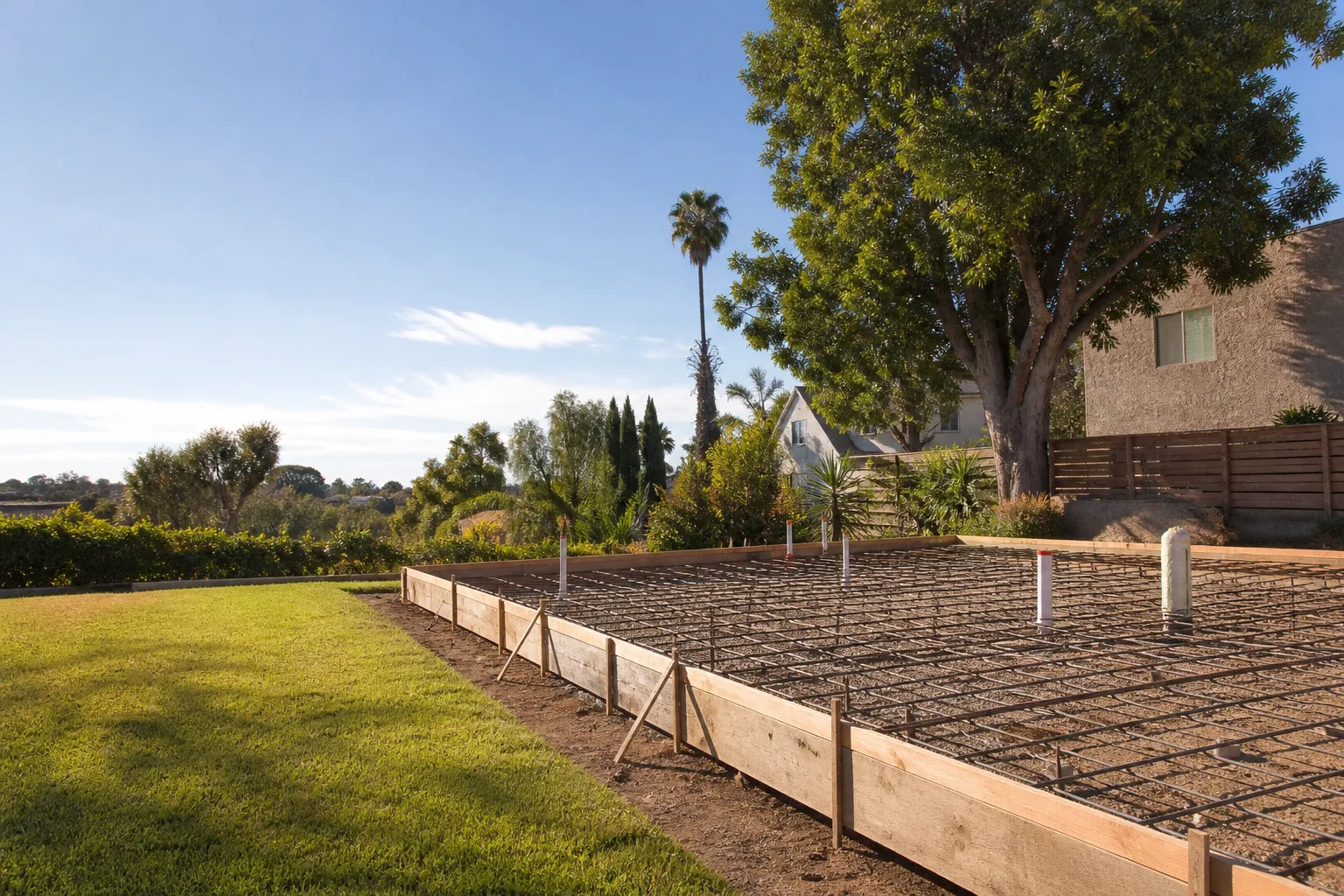
Site prep and utility work for a James Hardie-clad ADU or addition in Sacramento typically runs $8,000 – $28,000 depending on lot conditions, trenching depth, and whether SMUD or PG&E service upgrades are required. We handle the full scope: grading, compaction, trenching, water/sewer laterals, electrical conduit, and the sub-surface work your James Hardie exterior sits on top of. Most Sacramento homeowners discover a site prep problem the hard way: a failed utility connection after rain, a settling corner that pulls Hardie lap siding out of plane, or a trench that was never backfilled properly and now holds water against the foundation. This page covers what fails, what it costs to fix, and how to know whether you’re dealing with a real problem or a cosmetic one.
Key Takeaways
- Site prep failures under a James Hardie-clad structure show up as siding gaps, sticking doors, or wet soil against the foundation.
- Most utility-related fixes in Sacramento run $2,500 – $9,000 for a single-trade repair; full site rework runs higher.
- Clay soil expansion is the number one cause of site prep failure in this region. We’ll explain why below.
- We stock common trenching, drainage, and utility connection materials on our trucks and can quote most jobs in a single visit.
Which James Hardie Models This Applies To
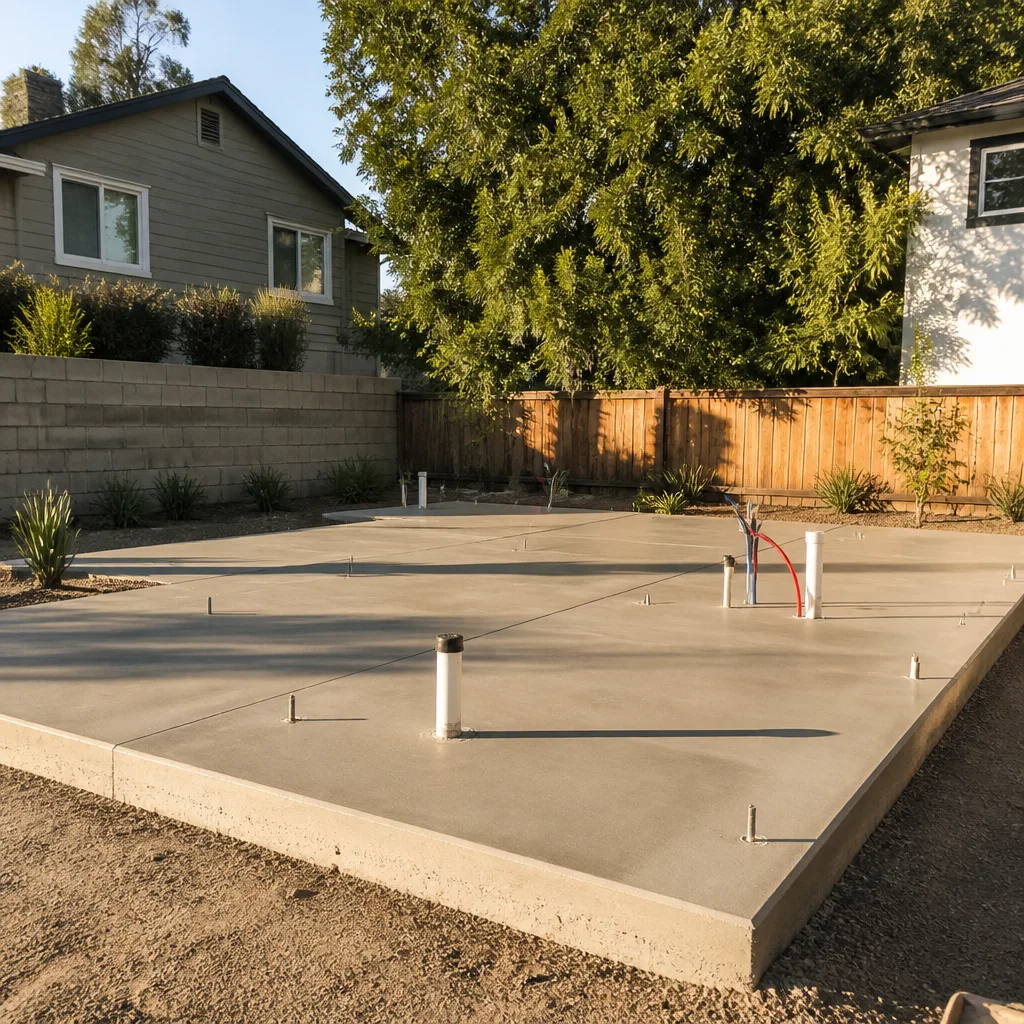
Site prep isn’t tied to a specific James Hardie siding product line. HardiePlank lap siding, HardiePanel vertical siding, HardieShingle, and HardieTrim all sit on the same sub-surface: your foundation, your drainage plane, and your utility stubs. What matters is which part of the site prep failed, not which Hardie product is on the wall. That said, heavier HardiePanel installations on wood-framed ADUs transfer more load to the foundation than lap siding, so settlement issues show up faster and more visibly with panel systems.
When we arrive, we look for three things: the lot’s soil type, the depth and condition of existing utility laterals (the pipe or conduit running from the street main to your structure), and whether the original grading still carries water away from the footprint. Sacramento lots east of Highway 99 tend toward hardpan clay that expands and contracts aggressively. Lots west, closer to the river, often sit on sandy loam that drains fast but compacts unevenly. Both conditions create different failure patterns, and both require different fixes. If we can see the original permit documents or site plan, that helps us identify what was supposed to be there versus what actually got installed.
One thing to know about OEM versus aftermarket when it comes to site prep: James Hardie doesn’t manufacture trench drains, utility conduit, or compaction equipment. What matters is material spec, not brand. We spec Schedule 40 or Schedule 80 PVC for electrical conduit per Sacramento code, Type K copper or PEX for water lines depending on soil chemistry, and ABS or cast iron for sewer laterals depending on depth and load. A “James Hardie site prep” issue is really a site prep issue under a James Hardie structure, and the fix is the same regardless of what’s on the walls.
Signs Your James Hardie Site Prep & Utilities Is Failing
- Hardie planks separating or buckling at a corner. This usually means the foundation corner is settling faster than the rest of the slab or footing. In Sacramento’s clay soil, a leaking downspout or sprinkler line near the corner accelerates the uneven movement. The siding isn’t failing; the ground under it is.
- Doors and windows on the ADU stick seasonally. Seasonal sticking is a classic sign of expansive soil. The structure heaves slightly in wet winters and settles back in dry summers. If it’s been getting worse each year, the soil under the footing is losing its bearing capacity and needs compaction remediation or pier work.
- Water pooling against the foundation after rain. This is a grading failure, and it’s the most common site prep problem we see in Sacramento. Flat lots plus clay soil plus one misdirected downspout equals water sitting against your stem wall. Over time, that water migrates under the slab and undermines the bearing soil.
- Slow drains or sewer odor near the ADU. A cracked or bellied sewer lateral causes this. Older Sacramento neighborhoods built before the 1980s often have clay or Orangeburg pipe laterals that fail under tree root pressure or soil movement. Your Hardie siding and interior finishes can be perfect while sewage backs up under the slab.
- Visible trench depression running from the street to the ADU. If a utility trench from the original build wasn’t compacted in lifts, it settles over time and leaves a visible low spot. This is a workmanship issue from the original site work, and it’s also a drainage path that directs water right where you don’t want it.
Replacement Cost & What’s Included
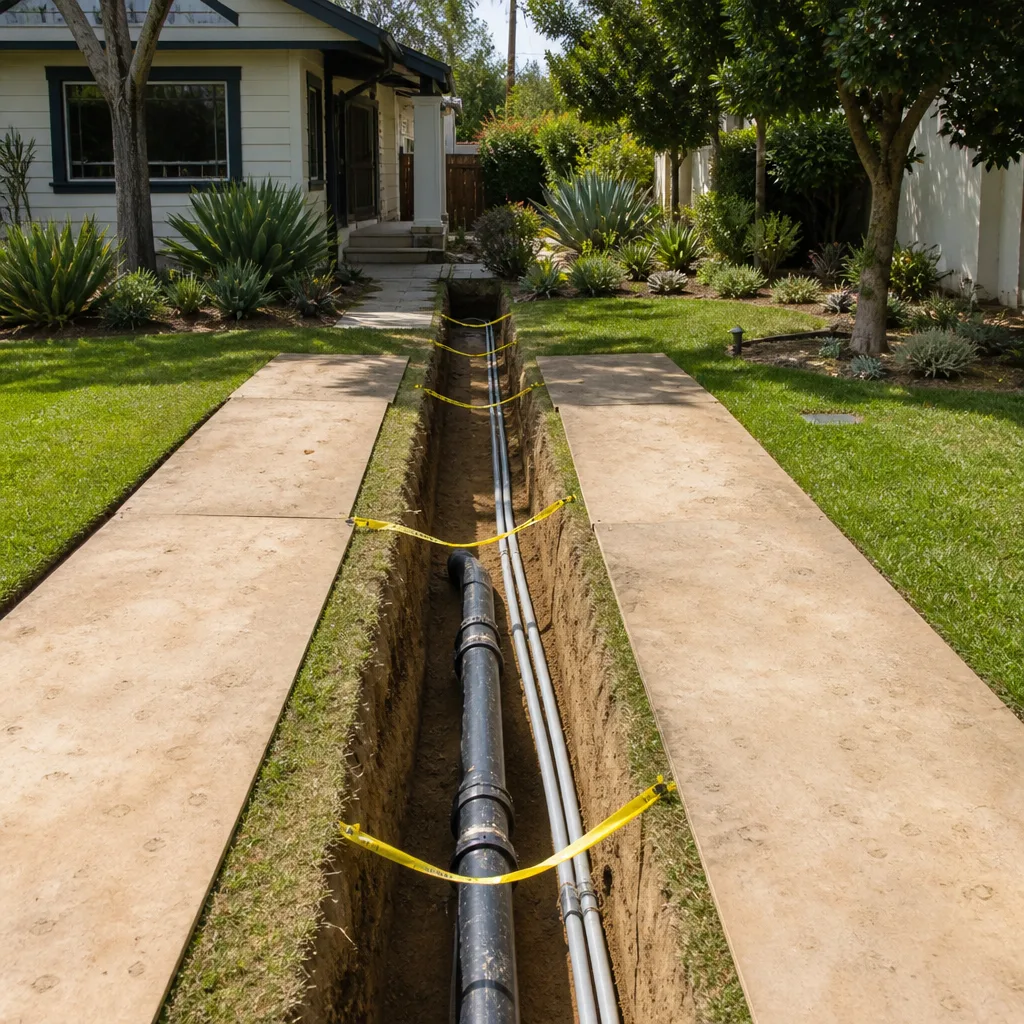
Here’s what we quote in Sacramento, based on typical conditions we’ve seen from Oak Park to East Sacramento to Land Park:
| Scope | Typical Range | What Drives the Cost |
|---|---|---|
| Grading and drainage correction | $2,500 – $6,500 | Lot size, soil type, whether you need a French drain or dry well |
| Sewer lateral repair or replacement | $4,000 – $12,000 | Depth, length to city main, whether sidewalk or street cut is required |
| Water line replacement | $3,000 – $7,000 | Material spec, trench depth, landscape restoration |
| Electrical trenching and conduit | $2,000 – $5,500 | Distance to panel or service point, SMUD coordination |
| Foundation underpin or pier remediation | $8,000 – $28,000 | Number of piers, access, engineering requirements |
Every quote includes the written line-item breakdown before work starts. That means the price for trenching, the price for material, the price for disposal, the price for backfill and compaction, all written down. No allowances, no change orders hidden in the fine print. The 365-Day Done Right Promise covers defects in workmanship for one full calendar year from project completion. If something we did fails in that year, we come back and make it right at no charge. That’s the whole promise, in writing.
Sacramento’s permitting adds cost too. A sewer lateral repair typically needs a plumbing permit and an inspection. Electrical trenching needs a permit and possibly a SMUD shutdown or reconnect. We pull the permits and schedule the inspections, and those costs are in the quote.
DIY or Call Us?
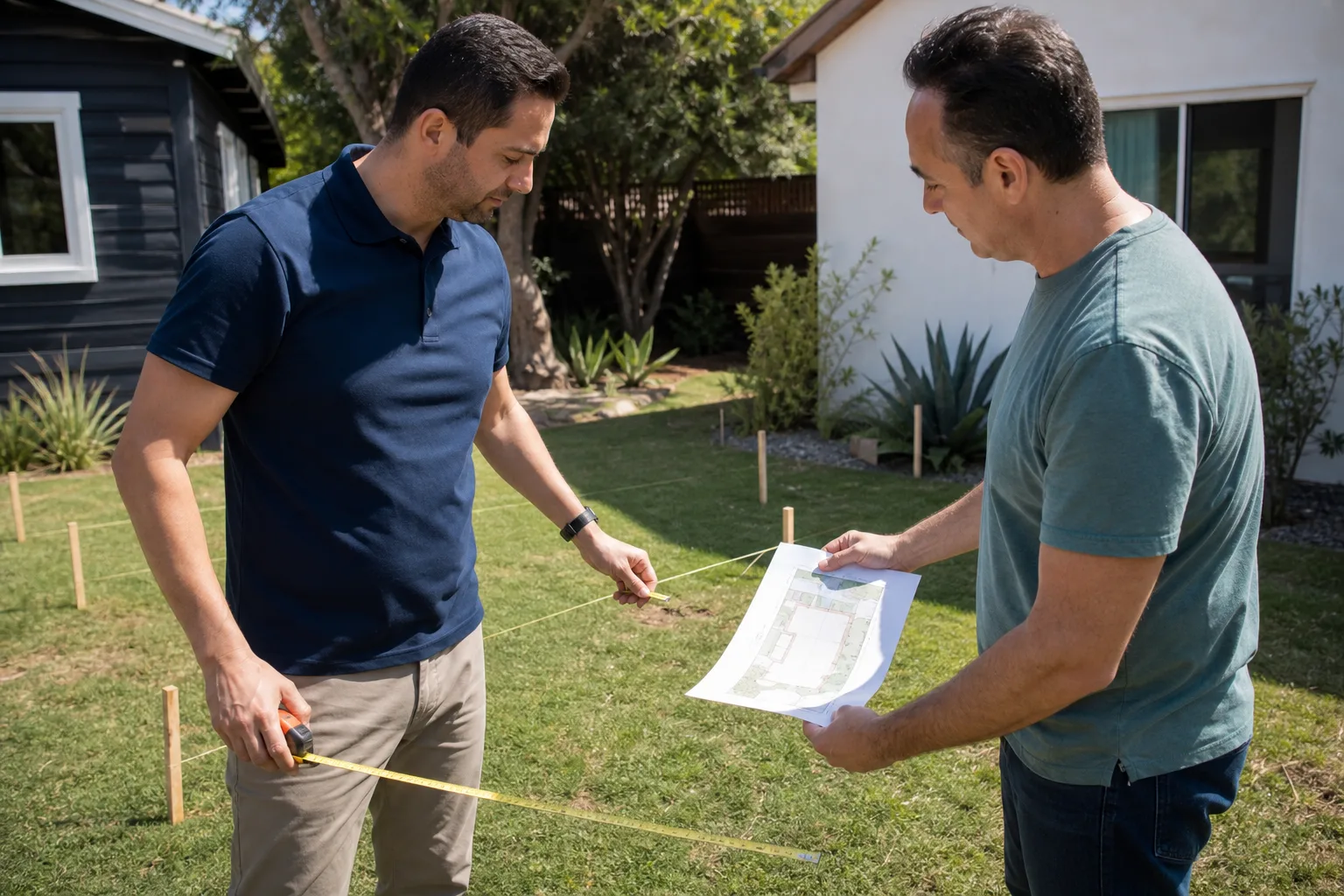
Here’s the honest split. You can check your downspouts and gutters yourself. Make sure water discharges at least five feet from the foundation. Walk the lot after rain and look for pooling. If you see pooling, mark it with stakes and call us. Those observations save time when we come out. You can also verify whether your utility laterals are visible at the cleanout or meter and note any visible cracks or rust.
What you shouldn’t do is rent a trencher and start cutting across your lot. Sacramento has underground utility line requirements, and hitting a gas line or a buried electric feeder is a genuinely dangerous outcome. PG&E and SMUD both require line locates before any excavation, and unmarked or mismarked lines are common on older Sacramento lots. Underexcavation and backfill compaction are also not weekend tasks: if the backfill isn’t compacted in six-inch lifts at the right moisture content, the trench will settle and you’ll have the same problem again in three years. When the scope involves trenching, utility connections, or any excavation deeper than 12 inches, that’s our work. Call (279) 300-1690 and we’ll tell you straight whether you need a permit, a locate, or just a French drain.
FAQs
Properly compacted site prep and correctly bedded utility laterals should last the life of the structure, typically 50 – 75 years or more for foundation and drainage work. The weak points in Sacramento are expandable clay soil and older clay or Orangeburg sewer laterals, which we recommend inspecting every 10 years and replacing proactively if they’re nearing the 50-year mark. Call (279) 300-1690 and we’ll take a look.
Most site prep failures can be repaired without a full re-excavation. Grading and drainage failures are corrected with re-sloping and drainage installs, not dig-outs. Foundation settlement on one side can often be stopped with helical or push piers. Full replacement only makes sense when multiple systems failed at once or the original work was so poor that patching doesn’t make economic sense. We’ll tell you which situation you have before any work starts.
A typical utility lateral repair or drainage correction runs two to four days in Sacramento, including permit inspection time. Foundation pier work runs one to two weeks. The work itself is fast; the inspections and city coordination are what stretch the timeline, and we handle all of that for you.
We stock common trenching, drainage, compaction, and utility connection materials on our trucks, so many repairs can be started the day we quote. Special-order items like deeper pier brackets or large-format drainage basins go through our local Sacramento suppliers and typically arrive within three to five business days. Call (279) 300-1690 for an exact quote, and we’ll tell you what’s in stock for your specific job.
Call Sutton ADU Sacramento for Site Prep & Utilities Work
If your James Hardie-clad ADU or addition is showing signs of settlement, drainage, or utility problems, we’ll send someone who knows what to look for. Every technician who comes to your property is background-checked, identity-verified, uniformed, and photo-badged under the Threshold Verified standard. You’ll get their name and photo before they arrive, a written price before any work starts, and the 365-Day Done Right Promise on everything we install. Call (279) 300-1690 for a free estimate.
Written by Miles Hartwell, Owner, Sutton ADU Sacramento at Sutton ADU Sacramento, serving Sacramento and nearby areas.