James Hardie Junior ADU Conversion: The Sacramento Owner’s Guide
If the James Hardie cladding or trim on your junior ADU conversion is cracking, warping, or pulling away from the framing, we can typically match the exact product line and have it replaced for $1,400 to $4,800 installed, depending on how much of the exterior needs reworking. Most Sacramento homeowners discover the problem after a wet winter when hairline fractures in HardiePlank lap siding or HardieTrim boards start to telegraph through the paint. The good news is James Hardie fiber cement parts are still manufactured and readily available, so we rarely have to substitute anything but the exact profile you already have.
We are Sutton ADU Sacramento, an independent Sacramento ADU contractor. We are not affiliated with James Hardie. What we are is deeply familiar with how their fiber cement performs on small dwellings in this climate, and we stock the most common profiles on our trucks so you are not waiting weeks on a special order.
Key Takeaways:
- Junior ADU exterior repairs in Sacramento run $1,400-$4,800 installed for typical partial re-cladding jobs
- We match James Hardie profiles exactly: plank width, texture, color, and exposure
- Most failures trace to improper flashing or clearance gaps, not the product itself
- Written price before we start, every time, no exceptions
Which James Hardie Models This Applies To
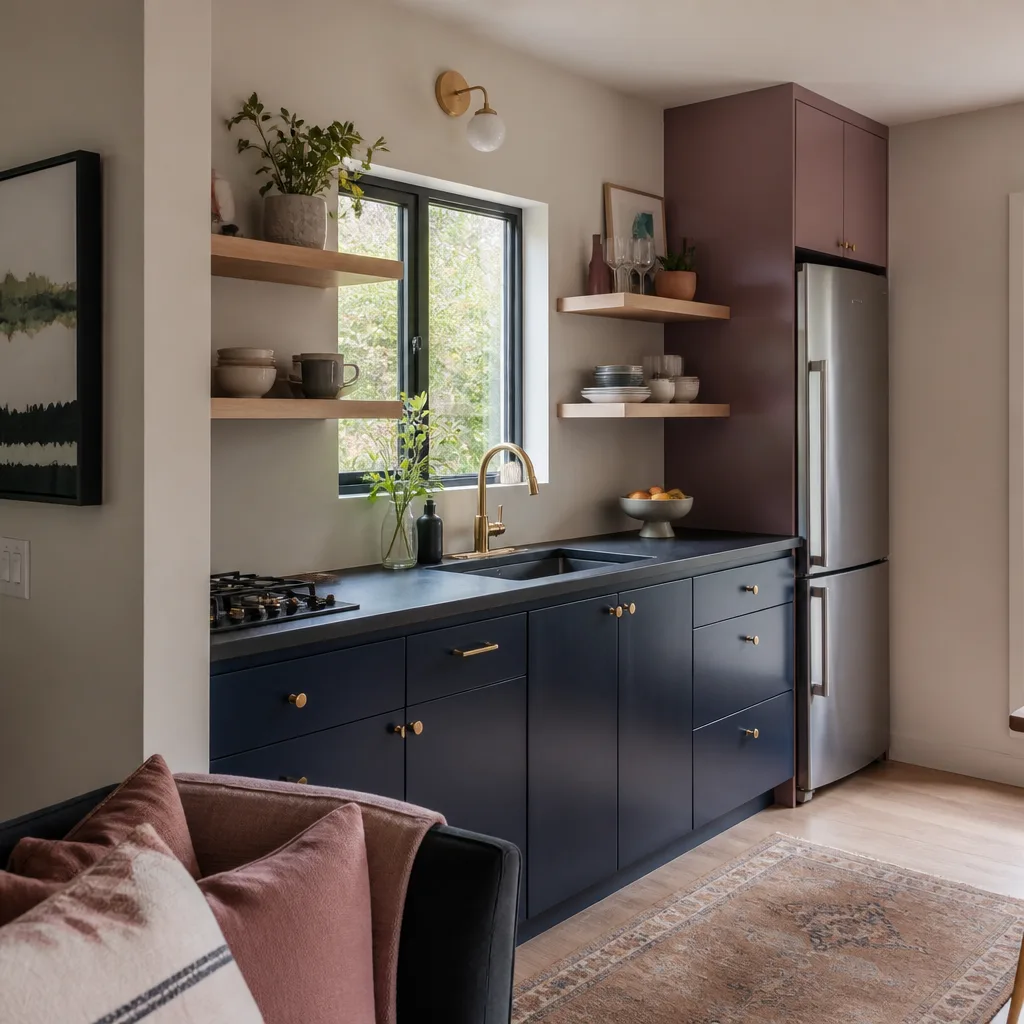
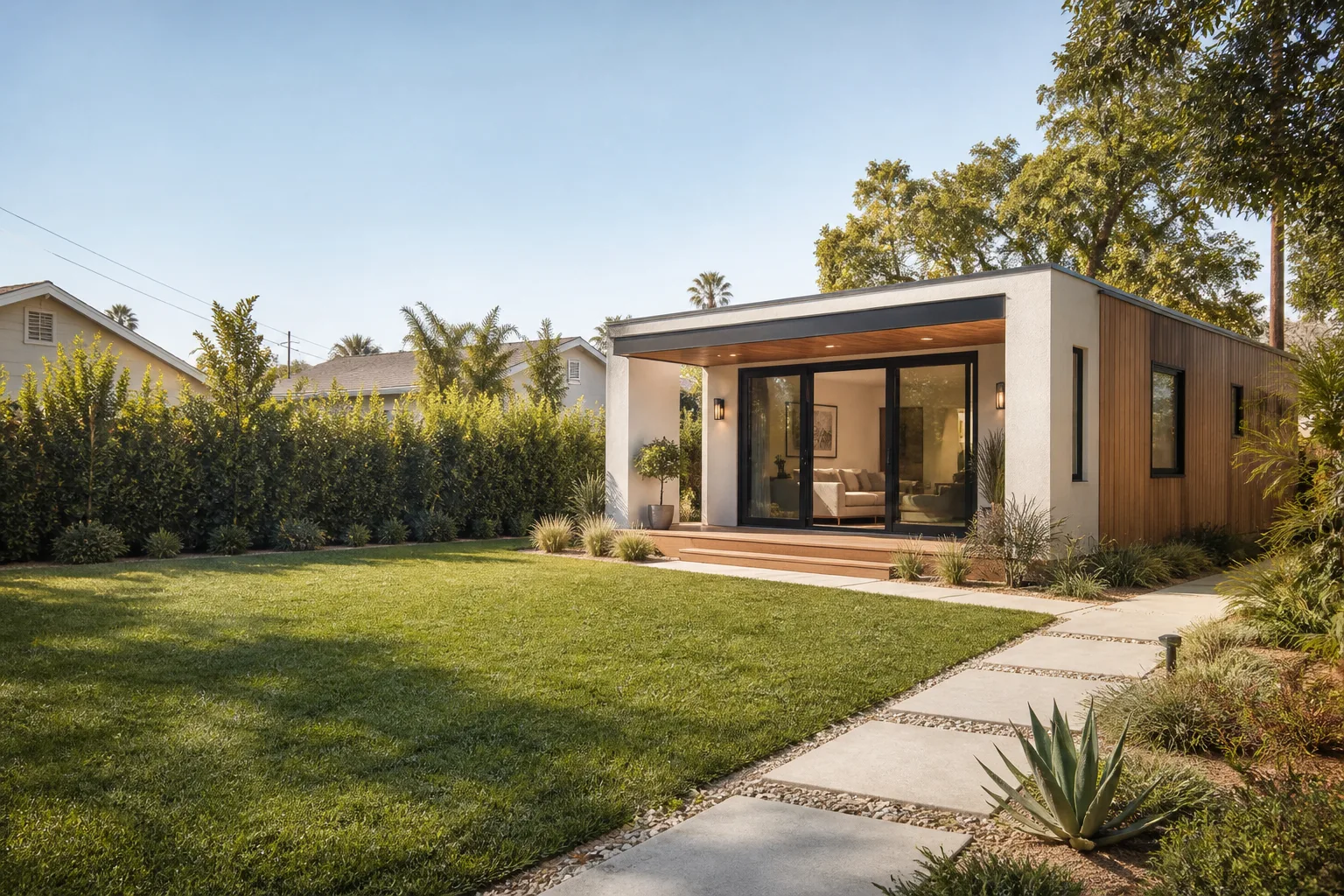
Junior ADU conversions, which in Sacramento means a dwelling of 500 square feet or smaller built inside or attached to an existing structure, are typically clad in one of four James Hardie product families: HardiePlank lap siding (5.25-inch or 8.25-inch exposure), HardiePanel vertical siding (4×8 or 4×10 sheets), HardieTrim boards (typically 3.5-inch or 5.5-inch widths around windows and corners), and HardieSoffit panels for the eaves. Each of these has a specific thickness, usually 5/16 inch for siding and 7/16 inch for panels. The part numbers are printed on the back face or edge of the board, but paint often obscures them. We identify profiles by measuring the exposure, the reveal, and the texture pattern: smooth, cedarmill, or stucco.
One compatibility gotcha Sacramento owners should know: James Hardie changed their color technology around 2016, moving from baked-on primer-only boards to ColorPlus pre-finished stock. If your junior ADU was built in the last decade, matching a factory-finished color requires ordering the specific ColorPlus shade, not just priming and painting a raw board. Primed boards still exist and can be painted to match, but the finish will not carry the same factory cure. We walk through that decision with you before any material gets ordered, because it changes both cost and long-term maintenance.
Aftermarket generic fiber cement exists, but we do not install it on James Hardie-clad structures. The board density, texture depth, and dimensional stability differ, and on a small JR-ADU those differences read as wavy lines and mismatched seams. OEM-equivalent James Hardie parts are not meaningfully more expensive at this scale, so the decision is straightforward.
Signs Your James Hardie Junior ADU Conversion Is Failing
- Hairline cracks radiating from fastener holes. This usually means the installer nailed too close to the board edge or over-drove the fastener. Fiber cement does not flex like wood; it cracks. We see this constantly on garage conversions done by crews that did not understand Hardie-specific fastening rules.
- Swelling or sponginess at the bottom edge of lap siding. James Hardie requires a minimum 6-inch clearance from finished grade in most conditions, and more when sprinklers hit the wall. Sacramento’s clay soil holds irrigation water, and wicking into the board edge causes delamination over time.
- Caulk lines pulling away from trim boards. Fiber cement expands and contracts with temperature movement. If the original installer filled joints with standard acrylic caulk instead of a high-quality elastomeric sealant meant for Hardie’s movement coefficient, the joint fails and water finds its way in.
- Rust streaks below siding joints. This points to exposed flashing or voided joint treatment. On many 15-to-20-year-old Sacramento conversions, the original flashing was unsealed steel that has since corroded through.
- Paint peeling in sheets, not spots. Fiber cement needs specific primers. If someone painted over raw Hardie with ordinary exterior latex and no alkali-resistant primer, the pH of the cement attacks the paint film and it releases in strips.
Replacement Cost & What’s Included
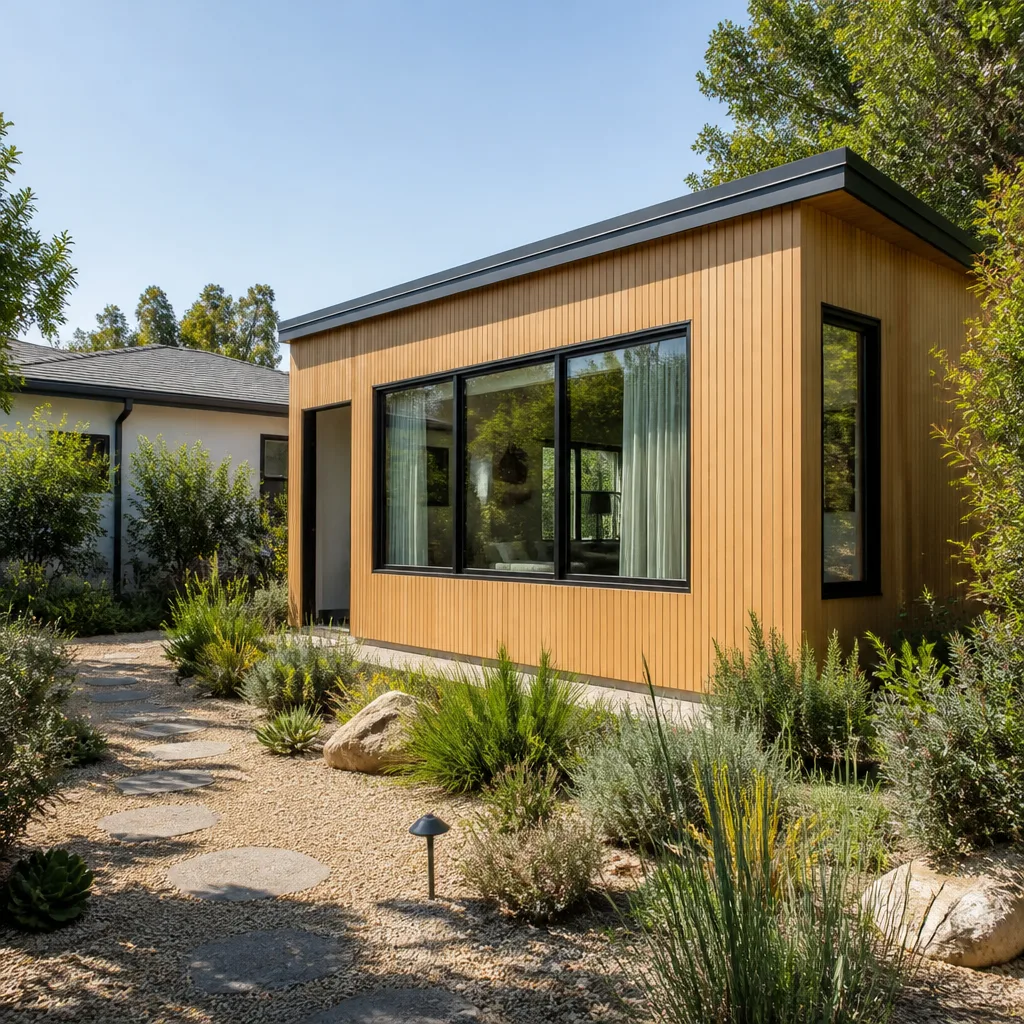
A straight partial re-clad on a junior ADU, meaning one wall or a damaged corner, usually runs $1,400 to $2,800 in Sacramento. A full exterior re-skin, including new trim, re-flashing all penetrations, and replacing any compromised water-resistive barrier, typically lands between $3,200 and $4,800 depending on the total square footage of the walls and whether we are pulling the old siding to inspect what is behind it. That price includes material, labor, fasteners, sealant, flashing, and haul-away.
What drives the range: the profile you have (smooth is cheapest, stucco-textured costs more), whether you have ColorPlus factory finish that must be special-ordered, how much trim gets replaced, and whether we find rot in the framing once the siding is opened up. When we find rot or termite damage, we stop, show you a photo, and hand you a written change order before a single additional board is removed. That is how we work on every project, not just the big ones.
Every repair or replacement we do carries the 365-Day Done Right Promise: if the work is not right within one full calendar year from completion, Sutton makes it right. The Promise covers defects in workmanship. If a board we installed fails during that year, we return and fix it. No haggling, no service fee, no second guess.
DIY or Call Us?
You can safely inspect your junior ADU exterior from the ground. Walk the perimeter, check the bottom edge clearance, look for cracked caulk, and take photos of anything that looks questionable. What you should not do is climb a ladder and start pulling siding off a second-story wall or near a power drop. Fiber cement boards are heavy and brittle, and cutting them without proper dust suppression puts silica into your lungs, which is a serious, permanent health risk. Sacramento’s summer sun also makes roof work on a JR-ADU hotter and more disorienting than most homeowners expect.
If what you are seeing is limited to one suspicious board and the rest of the cladding looks sound, call us and describe what you found. We can often confirm over the phone whether it is a wait-and-watch item or a fix-it-now problem. If it is a fix-it-now problem, call (279) 300-1690 and we will come measure and price it properly.
FAQs
James Hardie siding and trim typically lasts 30 to 50 years in Sacramento’s climate when installed to spec, but the paint or ColorPlus finish usually needs refreshment every 12 to 15 years. The boards fail early in Sacramento most often because of grade clearance violations and sprinkler overspray, not because the product breaks down on its own. Call (279) 300-1690 if you want us to look at your specific installation and tell you what is normal wear versus actual damage.
Small hairline cracks can sometimes be patched with an acrylic polymer repair compound, but only if the board is otherwise sound and dry. Once fiber cement delaminates, swells, or loses adhesion to the substrate, we do not repair it; we replace it. The repair-versus-replace call scales with the failure mode, and we will show you our reasoning in person before you commit to anything.
A single-wall partial re-clad in Sacramento typically takes one to two working days once materials are on site. Full re-skin projects usually run three to five days depending on weather, the amount of trim involved, and what we find behind the old siding. We give you a written schedule with the written price, and we stick to both.
We stock the most common Sacramento profiles: 8.25-inch smooth HardiePlank, 4×8 smooth HardiePanel, 3.5-inch HardieTrim, and standard vented soffit. If your conversion uses a less common profile or a specific ColorPlus shade, we order it from our Sacramento supplier and typically have it on site within one to two weeks. You will know the timeline before any money changes hands.
Call Sutton ADU Sacramento for a Written Price
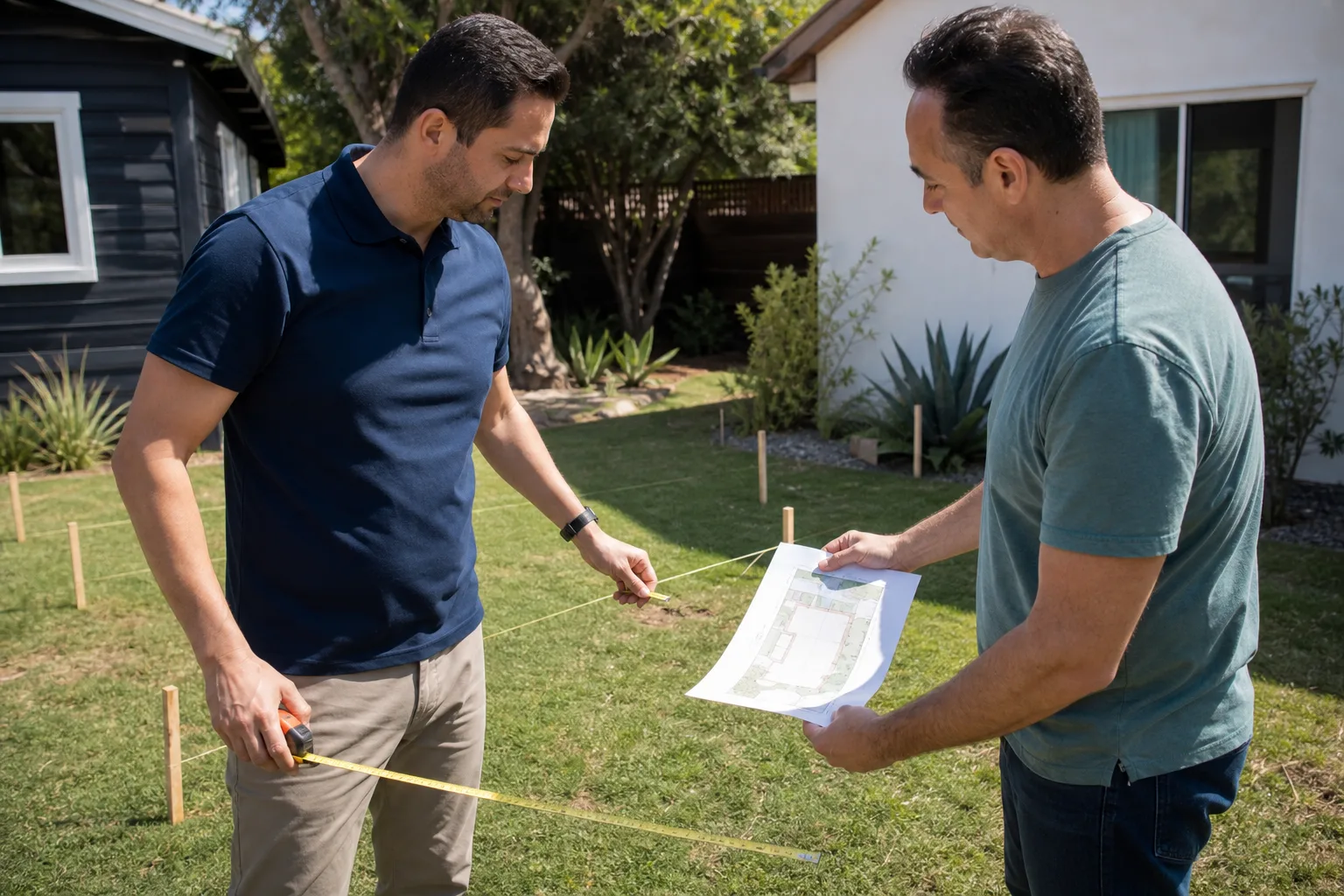
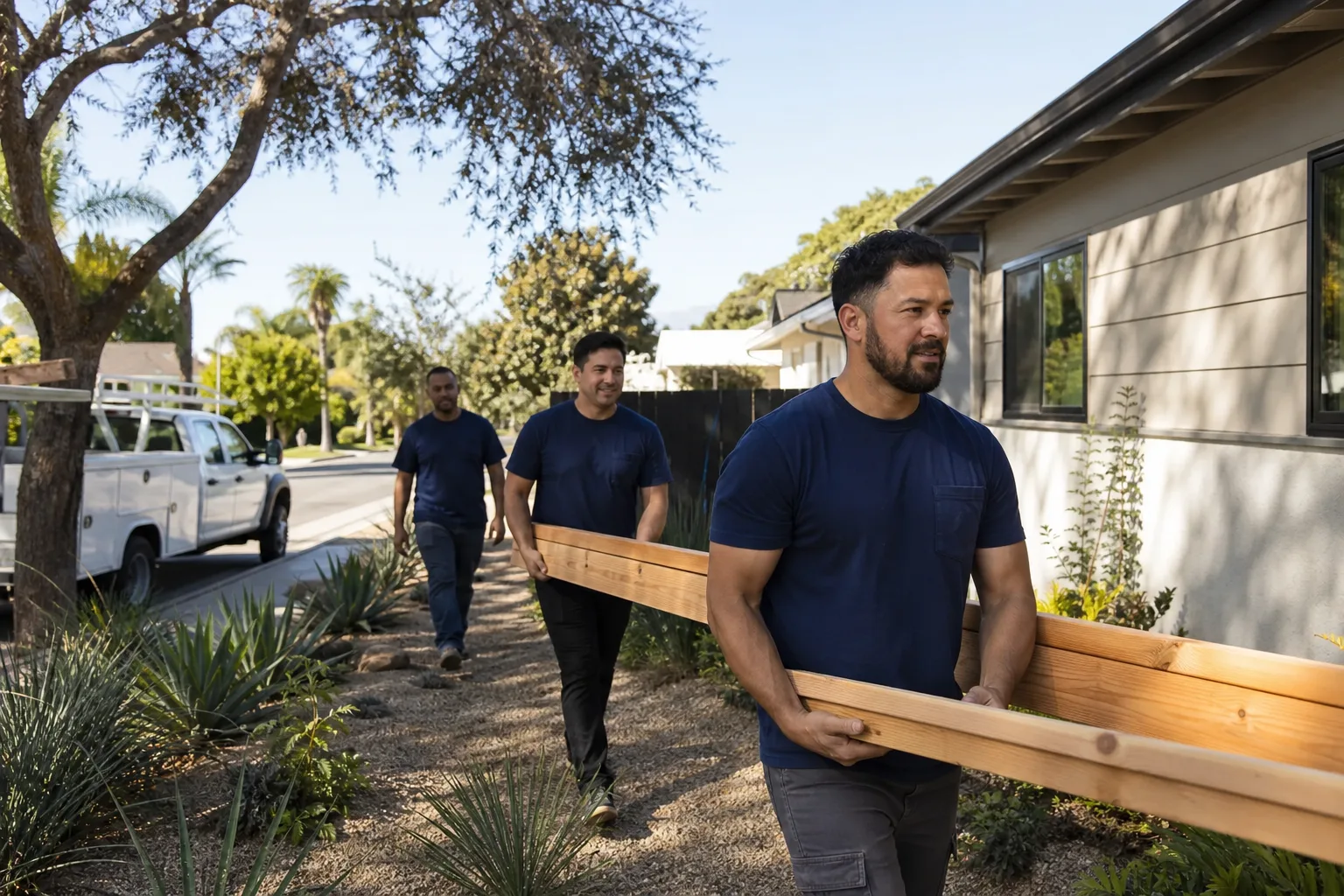
If the James Hardie cladding on your junior ADU needs attention, call us at (279) 300-1690. A real person answers, 24 hours a day, 7 days a week. We will schedule a site visit, measure what needs to be fixed, and hand you a written price before any work begins. That price will not change unless we find something behind the siding that changes the scope, and if we do, you will know about it and approve it first. Our crew is background-checked, identity-verified, uniformed, and photo-badged, and we send their name and photo to you before they arrive. The person at your door is the person we said would be there, every time.
Miles Hartwell, our owner, started this company because he was tired of watching Sacramento homeowners get surprised by vague estimates and unfamiliar crews. We also work with prefab ADU systems from Abodu, Cover, and Dvele, so if your junior ADU project becomes something bigger, we can help you think through the options honestly. But for a failed James Hardie board, start with the free estimate. That is what it is for.
Written by Miles Hartwell, Owner, Sutton ADU Sacramento at Sutton ADU Sacramento, serving Sacramento and nearby areas.